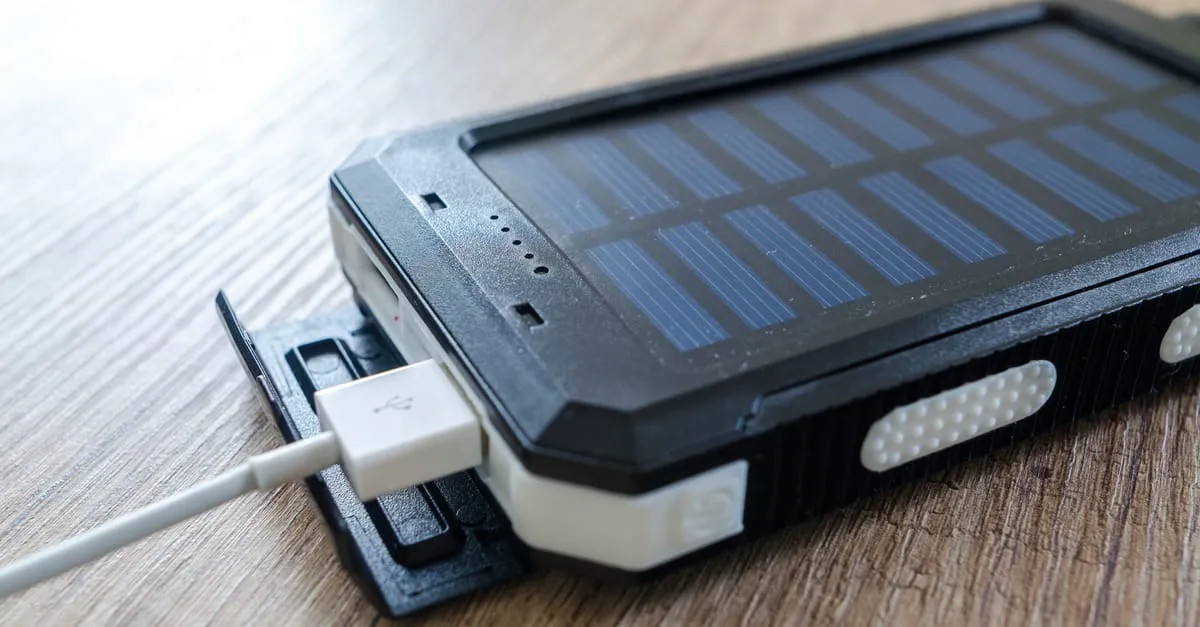

The first time our power went out for 14 hours, I learned exactly how much a freezer full of meat is worth. A portable power station would have paid for itself in one outage. That’s the math that pushes most small-property owners to finally buy one: not camping, not tailgating, but the very real fear of a dead fridge, a flooded basement from a stalled sump pump, or a well with no water because the pump has no power.
The good news is that the technology got dramatically better in the last few years. Almost every unit worth buying now uses a LiFePO4 (lithium iron phosphate) battery instead of the older NMC chemistry. LiFePO4 lasts 3,000 or more charge cycles versus 500 for NMC, runs cooler, and tolerates being left at full charge for months. For a backup unit that sits waiting for an emergency, LiFePO4 is the only chemistry that makes sense.
Here’s what actually matters when choosing one. Capacity (Wh) tells you how long it runs. A modern fridge uses roughly 1-2 kWh per day, so a 1000Wh unit keeps it cold for most of a day if you manage it. Continuous output (W) tells you what you can run at all. A fridge needs 100-200W running but 600-1200W to start the compressor, so a unit with too low an output rating will trip even if the battery is full. Surge/lifting rating covers that startup spike. And recharge speed matters when grid power flickers back briefly or you’re topping up from solar between cloudy days.
Below are the six units I’d actually trust for small-property backup, from a budget overnight unit to a whole-circuit powerhouse.
EcoFlow DELTA 3
The DELTA 3 is the unit I point people to when they ask for one power station that does most of what a small property needs. It hits the center of the market with 1024Wh of LiFePO4 capacity and 1800W of continuous AC output. That continuous rating gives common household essentials plenty of running headroom. Startup requirements still vary by appliance, so check the starting watts on any refrigerator, freezer, or pump against the unit’s operating guidance.
The 1024Wh capacity gets a typical fridge through most of a day if you keep the door closed and let the compressor cycle. If you need more runtime, the system expands up to 5kWh using compatible EcoFlow battery packs. For a one-or-two-room essentials setup during an outage, running the fridge, the modem and router, phone chargers, and a few lights, the DELTA 3 is the practical sweet spot.
Recharge speed is the other standout. With up to 1500W of AC input, it reaches 80% in 30 minutes and a full charge in 56 minutes. It also accepts up to 500W of solar input. The LiFePO4 cells are rated for 4,000 cycles to 80% capacity and a 10-year lifespan, and the battery pack is rated IP65.
The practical trade-off is capacity. The base unit is still a 1024Wh power station, so multi-day coverage calls for compatible expansion, and solar input tops out at 500W. Buy it for fast wall charging and an expansion path, then size that path to the outage you actually need to cover.
EcoFlow RIVER 2 Max
Not everyone needs to run a refrigerator. If your outage plan is “keep the lights on, charge the phones, run the modem so I can work, and power a CPAP overnight,” the RIVER 2 Max does all of that for half the price of a 1kWh unit. At 512Wh and just 13 pounds, it’s the one unit here you can carry around the house with one hand.
The LiFePO4 battery recharges fully in about an hour on AC, which is genuinely impressive for the price, and it carries the same 3,000-cycle rating as its bigger siblings. X-Boost technology lets it run devices rated up to 1000W (a coffee maker, a small space heater on low) by intelligently lowering voltage, though its true continuous AC rating is 500W. That’s the limitation to respect: this is a small-device unit, not a fridge unit.
For a renter, an apartment, or as a second small unit to keep alongside a larger one, the RIVER 2 Max is the easiest power station to recommend. It’s cheap enough to buy “just in case” without overthinking it. Just be honest about what 512Wh means. It’ll run a 60W router and a few LED lights for the better part of a day, but it won’t carry a refrigerator through a long outage.
Anker SOLIX C1000
If your single biggest worry in an outage is the refrigerator, the Anker SOLIX C1000 is purpose-built for the job. It packs 1056Wh of LiFePO4 capacity and 1800W of continuous output, with SurgePad technology pushing peak handling to 2400W. That combination starts and runs a residential fridge or chest freezer without complaint, and the capacity keeps it cold through a full day of normal door openings.
What sets the C1000 apart is how compact and efficient it is. At around 28 pounds it’s noticeably smaller than competing 1kWh units, and Anker’s pass-through and recharge are quick: roughly 43 minutes to 80% on AC. It’s expandable to 2112Wh with the add-on battery, so if a day of fridge runtime isn’t enough you can extend it into a multi-day setup without buying a whole new unit.
Anker has a strong reputation for build quality and customer support, and the C1000 lives up to it. The eleven ports cover essentially anything you’d plug in during an outage. The two real downsides are cost-related: the expansion battery is a meaningful additional spend, and a few of the smarter features (like setting charge limits to preserve battery health) live in the app rather than on the unit itself. For a fridge-first backup plan, though, this is the one to beat.
Bluetti AC200L
When 1kWh isn’t enough, the Bluetti AC200L is where serious backup begins. It carries 2048Wh of LiFePO4 capacity (twice the units above) and a 2400W inverter that lifts to 3600W for startup surges. That lifting power is what lets it start a 3/4 HP well pump, a sump pump, or even a window AC unit, loads that smaller stations simply refuse to run. For rural small properties on a well, this is often the smallest unit that actually solves the water problem.
The 30A TT-30 RV output is a tell about who this is for. You can feed it into a transfer switch or an RV-style inlet and back-feed essential household circuits rather than running extension cords. And capacity is wildly expandable: with add-on batteries the AC200L scales to 8192Wh, enough to ride out a multi-day outage if you’re recharging from solar during the day.
It accepts up to 1200W of solar input and recharges 0-80% in about 45 minutes on AC. The trade-offs are physical and financial. At roughly 62 pounds it’s a two-hand lift with a real handle, not something you toss in the car. And as a high-end unit it costs two to three times what a 1kWh unit does. But for well-pump backup or whole-essentials coverage, nothing smaller will do the job.
Bluetti AC180
The AC180 is the unit I’d build a small solar backup kit around. With 1152Wh of LiFePO4 capacity and 1800W output (2700W lifting), it covers the same fridge-and-essentials duty as the DELTA 3, but its solar story is what earns it the “best solar bundle” slot. It accepts up to 500W of solar input, so a pair of 200-watt panels can meaningfully refill it during daylight, turning a one-day battery into a system you can run indefinitely on sunny days.
That matters for off-grid use and for outages that stretch past a single day. A power station alone is a battery; once it’s empty during a multi-day grid failure, it’s a paperweight unless you can recharge it. Solar input solves that, and the AC180’s recharge flexibility (AC, solar, car, or generator) gives you options when the grid is down for a while.
On AC it hits 0-80% in 45 minutes, matching the fastest units here. The eight outlets cover a typical essentials load. The catch is that the solar panels are a separate purchase, so budget for them, and there’s only one USB-C PD port, which feels stingy in 2026. As a standalone backup unit it’s perfectly good; as the heart of a small solar setup, it’s excellent.
Jackery Explorer 1000 v2
Jackery is the brand most people have heard of, and the Explorer 1000 v2 is the reason it deserves the reputation for beginners. It’s the most plug-and-play unit on this list: turn it on, plug in, done. No app required, clear labeling, and a layout that makes sense the first time you look at it. For someone buying their first power station who feels intimidated by specs, that simplicity has real value.
The v2 is a genuine upgrade over the original. It now uses a 1070Wh LiFePO4 battery (the old version was NMC), with 1500W continuous output and a 3000W surge. At about 23.8 pounds it’s the lightest of the 1kWh-class units here, which makes it easy to move room to room. The 1-hour emergency fast charge is a nice touch when grid power comes back briefly.
The one spec to weigh is the 1500W continuous ceiling. It’s plenty for a fridge, a freezer, most power tools, and a coffee maker, but it’s lower than the 1800W units, so a high-draw space heater or a large microwave can push it. And Jackery’s expansion ecosystem isn’t as deep as EcoFlow’s or Bluetti’s, so it’s less of a “grow into it” platform. For a straightforward, reliable, easy-to-use first backup unit, though, it’s hard to go wrong.
How We Picked These
Selection criteria for this roundup:
Battery chemistry. We only considered units with LiFePO4 (LFP) cells. For a backup unit that spends most of its life sitting at full charge, LFP’s 3,000+ cycle life and tolerance for long storage make older NMC chemistry a non-starter.
Output that matches real loads. A power station is useless if it trips when your fridge compressor starts. We weighed continuous output and surge/lifting ratings against the actual startup demands of refrigerators, freezers, sump pumps, and well pumps.
Capacity for the intended use. We rated each unit within its tier. A 512Wh budget unit was judged on how well it handles lights and devices, not on whether it can run a fridge for a day.
Recharge flexibility. AC recharge speed matters when the grid flickers back briefly. Solar input matters for outages that outlast the battery. We favored units that recharge fast and from multiple sources.
Brand reliability and support. These are emergency tools. We stuck with established brands (EcoFlow, Anker, Bluetti, Jackery) that have track records on warranty and firmware support.
Frequently Asked Questions
Before You Buy
A power station is one of the few purchases where getting the spec wrong means it literally won’t do the job in an emergency. Nail down your loads and runtime before you buy:
- What size power station do I need: how to add up your watt-hours and pick the right capacity.
- How to power a fridge during an outage: matching output to your refrigerator’s startup surge.
- Well pump backup power: what it takes to keep water running when the grid is down.
- Best solar generator for a well pump: the units that can actually run a 240V pump, and the honest voltage rule.
- Jackery vs EcoFlow: choosing between the two brands featured here.
- Best power station for a CPAP: if a CPAP is your priority load, the humidifier changes the math.
Bottom Line
For most small-property owners, the EcoFlow DELTA 3 is the right call: 1800W of continuous output, fast recharge, and room to expand. If your only worry is keeping the refrigerator cold, the Anker SOLIX C1000 is purpose-built for it and runs a hair smaller and lighter. On a tight budget for lights and devices, the EcoFlow RIVER 2 Max is hard to beat at half the price, just don’t ask it to run a fridge.
Stepping up, the Bluetti AC180 is the unit to build a solar kit around, and the Bluetti AC200L is the smallest station that reliably starts a well pump and can scale into multi-day backup. And if you just want something simple and trustworthy for your first unit, the Jackery Explorer 1000 v2 turns on and works with no learning curve.
Whatever you choose, size it to the appliance with the highest startup surge you need to run, then keep it topped off so it’s ready when the grid isn’t.