
On this page · 8 sections
Short answer: a rain barrel is great for the garden and the lawn, it is generally legal in most of the United States but you need to check your own state and local rules, and the water it collects is not safe to drink without proper treatment. It comes off a roof, so it carries grit, bird droppings, and shingle residue. Use it on plants and outdoor chores, not in your glass.
A barrel under a downspout is one of the cheapest upgrades you can make on a small lot, and it saves dragging a hose across the yard. Here is what to know before you buy one.
Is It Legal Where You Live?
This is the first thing to settle, and the honest answer is: it depends on your state, and you should verify before you buy.
For most people in most states, residential rainwater collection is legal and even encouraged. Plenty of states promote it as a water conservation measure, and some places offer rebates or tax incentives for installing barrels or cisterns. Check with your local water utility before you buy, in case it offers one.
The exceptions to check carefully are a handful of western states where water rights law has historically restricted collecting rainwater, because the runoff was considered to belong downstream. Colorado is the well-known example. For years it was heavily restricted there, and a 2016 state law now allows limited residential collection: up to two barrels with a combined capacity of 110 gallons, used outdoors on the same property, according to the Colorado Division of Water Resources. That is the specific, documented case. I am not going to quote precise limits for any other state, because they vary and they change, and the last thing you want is to rely on a number from a website instead of your own state’s current rule.
So the practical framing is simple. Assume it is generally legal, then confirm. Search your state’s name plus “rainwater collection law,” and check with your municipality or county too. There is one more layer that’s easy to miss: homeowner associations. An HOA can ban or restrict visible barrels even where the state allows them, and some local health codes have rules about standing water and cross-connections. Five minutes of checking saves you from buying something you have to return or hide.
How Much Water You Can Actually Collect
A roof sheds more water than you might think, and it changes how you think about barrel size.
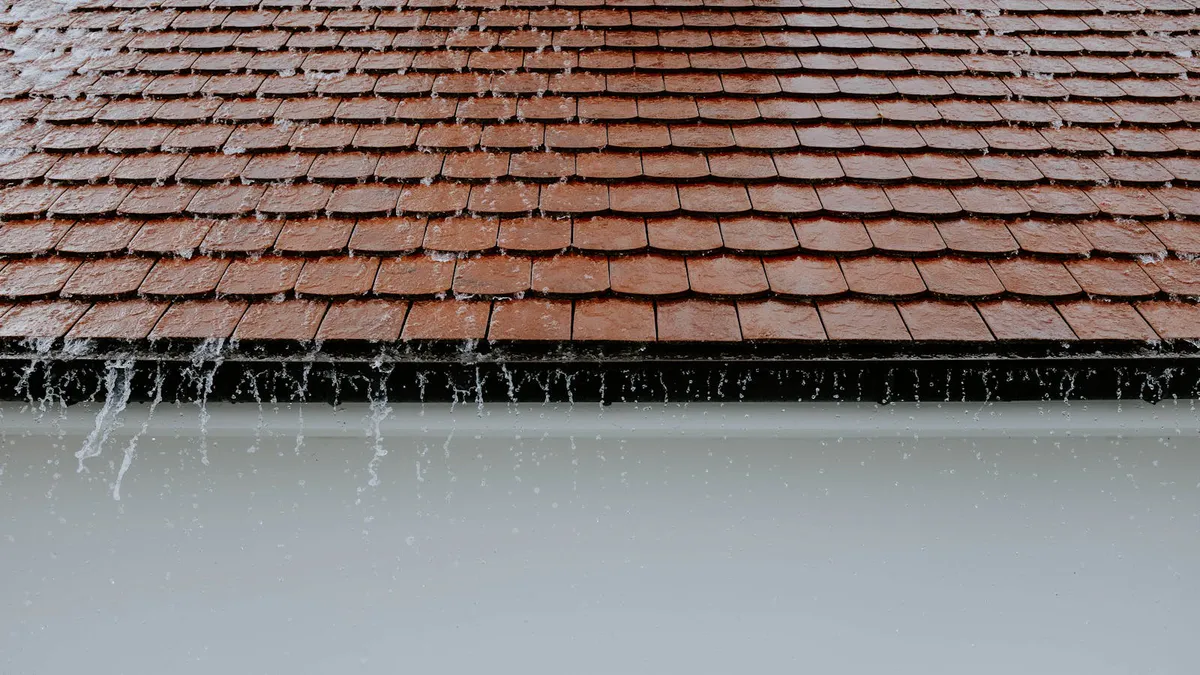
The rough math: a roof collects about 600 gallons of runoff per inch of rain for every 1,000 square feet of roof area, the figure University of Florida IFAS Extension uses. That number assumes you do not lose much to splash and evaporation, so treat it as a generous estimate, but it is close enough to plan with.
Now run it against a barrel. A typical rain barrel holds 50 to 80 gallons. Say you have a modest 1,000 square foot roof and only the front half drains to your downspout, so call it 500 square feet feeding one barrel. A single inch of rain on that area produces roughly 300 gallons. Your 60 gallon barrel fills and overflows after about a fifth of an inch of rain.
That is the surprising part. The barrel is not your reservoir for the whole storm. It captures the first slug of water and then overflows for the rest. On a small lot with a small roof, the barrel still fills almost every time it rains, which is exactly why it works. You do not need a big roof to keep a small barrel topped up. You need a plan for where the overflow goes.
Choosing and Setting Up a Barrel on a Small Lot
You have two basic paths. Buy a purpose-made rain barrel with the fittings already installed, or convert a food-grade 55 gallon drum yourself. For a first barrel on a tidy small lot, I would buy the ready-made one. They look better, the spigot and overflow ports are already sealed, and you are not drilling holes in your one free afternoon. Decorative resin barrels are the budget buy. A nicer two-barrel kit with a diverter costs more. If you also want a drinkable backup, browse our picks for water filters and storage alongside your barrel.
Here is how to set one up.
Pick the downspout. Choose the one that drains the most roof and is closest to where you want the water. Less hose to drag is the whole point.
Use a downspout diverter. A diverter is a fitting that cuts into the downspout and routes water sideways into the barrel. When the barrel is full, the diverter sends the rest back down the spout and away from your house. This is much cleaner than the old method of cutting the downspout short and letting it dump straight into an open barrel, and it keeps more debris out.
Raise the barrel. This is the single most important setup detail. A rain barrel has almost no water pressure on its own. Putting it up on a sturdy platform of concrete blocks or pavers, even 12 to 18 inches, gives you enough head pressure to actually fill a watering can from the spigot and lets you fit a bucket underneath. Make the base level and solid. A full 60 gallon barrel weighs around 500 pounds, so you do not want it tipping.
Run an overflow hose. Every barrel needs an overflow port with a hose that carries excess water away from your foundation. Direct it to a garden bed, a lawn, or a dry well, not back against the house. Skipping this turns your barrel into a basement-flooding machine on a heavy rain day.
Screen the top. Cover the inlet with a fine mesh screen. This keeps leaves and debris out, and more importantly it keeps mosquitoes from breeding in standing water. More on that below, because it matters.
On a small lot, position matters as much as plumbing. Tuck the barrel against the house where it is out of the main sightline, keep the spigot facing your beds, and leave just enough room to slide a watering can or hose connector underneath.
Rain Barrels Worth Buying for a Small Yard
If you are buying a ready-made barrel rather than converting a drum, a flat back matters when the barrel needs to sit flush against a wall or fence instead of bowing out into your walkway. If the barrel will be visible in the yard, a decorative shape may matter more. Also look for a built-in spigot, an overflow port, and a screened top. Here are three that suit a small yard.
The all-around pick is the RTS Home Accents 50-Gallon ECO Rain Barrel. The flat back lets it sit flush against a house or fence, and its textured body is made in the USA from UV-resistant polyethylene using 100% recycled plastic. It has a built-in overflow valve, and barrels can be linked when you need more capacity. Linked capacity is exactly where state limits such as Colorado’s 110-gallon cap come into play, so size the system to your local rule. The stand is included, which raises the spigot so a watering can fits under it. The tradeoff is the spigot itself: it is plastic, not brass.
For durability, the FCMP Outdoor Raincatcher 4000 is the one to get. It is a 50-gallon flat-back barrel made from recycled, UV-inhibited, BPA-free polyethylene, which is built to stand up to sun, and it comes with side spigots, a debris screen, overflow and garden hoses, and a linking kit. If you want a barrel you set up once and forget, this is it.
If the barrel will sit where everyone sees it, the Good Ideas Rain Wizard Urn is the decorative pick. It is an urn-shaped 50-gallon barrel with a flat back, so it still sits close to a wall, and its top doubles as a planter for herbs or flowers. A mesh screen keeps leaves out, and a built-in channel sends overflow away from the house.
Whichever you pick, the setup rules above still apply: raise it on a level, solid base for usable water pressure, run an overflow hose away from the foundation, and screen the top against mosquitoes.
What the Water Is Actually Safe For
This is the section I would tattoo on the inside of every new barrel owner’s eyelids if I could.
Rain barrel water is excellent for outdoor use. Watering ornamental beds, shrubs, lawns, container plants, washing tools, rinsing muddy boots, topping off a pond. Your plants will not care that the water is unfiltered, and using collected rainwater instead of treated tap water is genuinely good for both your bill and your garden, since rainwater has no chlorine.
What it is not safe for is drinking, cooking, or filling a water bottle. The water came off your roof. That means it has picked up roof grit, dust, pollen, bird and squirrel droppings, and residue from asphalt shingles, and it has been sitting warm in a dark plastic barrel growing bacteria. None of that is a problem for your tomatoes. All of it is a problem for your gut.
There is a middle category worth a note: edible plants. Rutgers Cooperative Extension, which studied rain barrel water on a vegetable garden, found it can be used safely with care: apply it only to the soil, not directly on the plants, and treat the barrel for pathogens. Some extension services, including UF/IFAS, go further and advise against using untreated roof water on edibles at all. A cautious middle line: keep untreated roof water off the parts of edible plants you eat raw. Watering the soil around tomatoes or squash, with the fruit up off the ground, fits the Rutgers soil-only rule. Spraying barrel water onto lettuce leaves or low-growing root vegetables you eat raw, like radishes or carrots you only rub off, does not. Water the roots, not the salad.
Mosquitoes: The Thing That Ruins Barrels
A rain barrel is a tub of warm, still water sitting in your yard all summer. That is a five-star mosquito resort if you let it be one.
The fix is not complicated. Keep a tight, fine mesh screen over every opening so adult mosquitoes cannot get in to lay eggs and larvae cannot get out. Check the screen after storms, because debris tears it. If you still see wrigglers in the water, you can drop in a mosquito dunk, which is a small puck containing Bti, a bacterium that kills mosquito larvae. The EPA says Bti has no toxicity to people and its toxins affect only the larvae of mosquitoes, black flies and fungus gnats. The Mosquito Dunks label says each one lasts 30 days or more, and a piece of one is enough for a barrel.
The other defense is simply using the water. A barrel you draw down regularly does not sit stagnant long enough to become a nursery. Barrels become mosquito factories when people install them, feel good about it, and then never actually use the water.
Winterizing the Barrel
If you live where it freezes, you cannot leave a full barrel out all winter. Water expands when it freezes and will crack the barrel, split the spigot, or rupture the diverter fitting.
Before the first hard freeze, drain the barrel completely. Disconnect it from the downspout, or flip your diverter to its winter bypass position so winter rain and snowmelt run straight down the spout and away from your house instead of into the barrel. Open the spigot so any trapped water can escape, and leave it open. Store it upside down or under cover so it does not collect water and ice over the winter. In spring, rinse it out, reconnect the diverter, and you are back in business.
In mild, frost-free climates you can run a barrel year-round. Just keep an eye on the screen and the overflow.
Common Mistakes
A few common errors, so you can skip them.
No raised platform. A barrel on the ground gives you a sad trickle. Raise it on blocks for usable pressure.
No overflow management. Without an overflow hose aimed away from the house, a heavy rain sends water straight against your foundation. This is the mistake that does real damage.
Open top, no screen. This invites mosquitoes, leaves, and algae. Screen everything.
Buying one giant barrel. On a small lot, two linked 50 to 60 gallon barrels are often more useful than one huge one. They are easier to fit, easier to move when empty, and you can place them at two different downspouts.
Treating it as emergency drinking water. It is not. A rain barrel is garden infrastructure. If your goal is stored water you can actually drink in an emergency, that is a different setup with clean containers and treated water. See how much water to store per person and how to store water long-term for that side of the project.
A rain barrel is one of those rare small-yard projects that pays you back fast. An afternoon of setup, a screen, a raised base, and a place for the overflow to go, and you will water your garden for free every time it rains.