
On this page · 10 sections
Three to four hens. That’s the answer.
Not one. Not two. Not six. Three or four.
I’m going to explain exactly why that number works, what your daily life with them looks like, and the things the chicken blogs don’t mention until it’s too late.
Why Not Fewer Than Three?
Chickens are flock animals. A single chicken is a stressed, unhappy chicken. They need company. Two chickens can work, but if one gets sick or dies (and chickens die of all sorts of things), you’re suddenly down to one lonely bird and scrambling to find a companion.
Three is the minimum for a stable social group. They establish a pecking order, keep each other warm in winter, and are generally calmer and happier in a small group.
Why Not More Than Four?
Four hens is manageable for a beginner. Six is where things start to get messier. Literally. More chickens means more poop, more feed, a bigger coop, and more noise. The work scales linearly. Twice the chickens, twice the cleaning, twice the feed bill.
Start small. You can always add birds next spring. You can’t un-buy chickens you’re tired of taking care of.

The Egg Math
A good laying hen in her prime lays most days. University of Minnesota Extension puts it at roughly six eggs a week; plan on 4 to 6 in peak season (spring and summer) once you allow for off days. Production drops in fall and winter as daylight hours decrease.
Three hens: 12-18 eggs per week in peak season. That’s about a dozen and a half. More than enough for a small family.
Four hens: 16-24 eggs per week in peak season. You’ll be giving eggs to neighbors by July.
Here’s the part nobody mentions upfront: hens don’t lay forever. Production is highest in the first laying year. In UNH Extension’s example, a 10-hen flock laying about nine eggs a day eases off to six or seven a day after roughly 13 months, and UF/IFAS Extension notes that many hens decline significantly after two or three years. They’ll still lay, just less.
You have to decide ahead of time what you’ll do with older hens. Some people keep them as pets. Some add new pullets and keep a mixed-age flock. Some find them new homes. Figure out your plan before you start.
What Breed Should You Pick?
For beginners, you want breeds that are:
- Friendly and easy to handle
- Good layers (200 or more eggs per year)
- Hardy in your climate
- Not flighty (calm chickens are easier chickens)
Best Beginner Breeds
The yearly egg counts below are UNH Extension’s estimates.
Rhode Island Red - The classic backyard chicken. Hardy, friendly, lays 250-280 brown eggs per year. Handles heat and cold well. Hard to go wrong.
Barred Plymouth Rock - Docile, good layers (200-280 eggs/year), pretty black-and-white striped feathers. Great with kids.
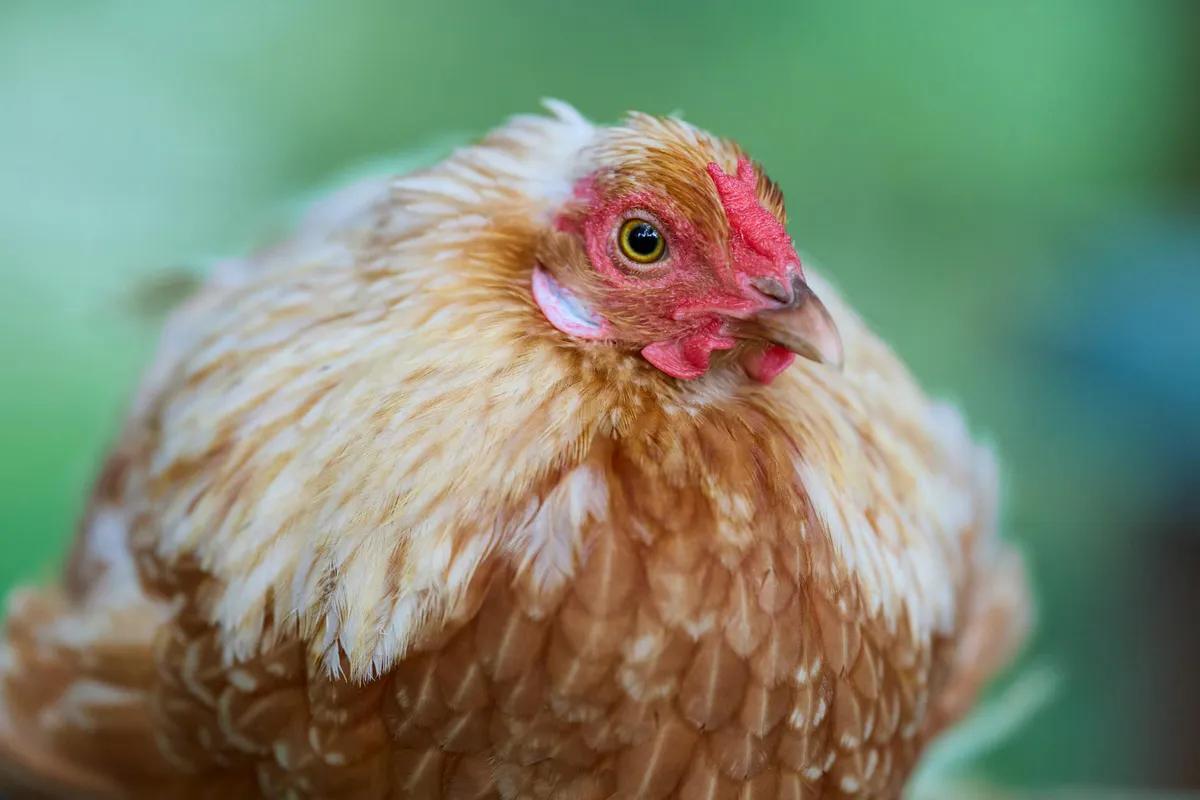
Buff Orpington - The golden retriever of chickens. Fluffy, calm, likes to be held. Lays 200-280 brown eggs per year. Gets broody (wants to sit on eggs) more than other breeds, which can be annoying.
Australorp - An Australorp hen set a world record in an early Australian laying trial with 364 eggs in 365 days. Today’s birds lay 200-280 eggs per year. Quiet, friendly, black feathers with green sheen. An underrated breed.
Easter Egger - Not technically a breed, but a mix that lays blue or green eggs. Friendly, hardy, and kids go crazy for the colored eggs. Lays about 180-200 per year.
For more laying breeds that suit three or four hens, see our guide to the best egg-laying breeds for a small flock.
The Daily Time Commitment
Here’s what your mornings and evenings actually look like with a small flock:
Morning (5-10 minutes)
- Open the coop door to let them into the run
- Check feed and water (refill if needed)
- Collect eggs from nesting boxes
- Quick visual check: are all birds moving around normally?
Evening (5 minutes)
- Make sure all birds are inside the coop
- Close and latch the coop door (predator protection)
- Quick check that water isn’t empty
Weekly (30-45 minutes)
- Clean out the coop (scrape droppings board or replace bedding)
- Scrub and refill waterer
- Check for any coop repairs needed
- Spot-clean the run if needed
Monthly (1 hour)
- Deep clean the coop
- Refresh nesting box bedding
- Check for mites or lice (look at the vent area and under wings)
- Stock up on feed
Total daily time: 10-15 minutes. That’s less time than walking a dog.
The Real Costs
Startup (One Time)
| Item | Relative Cost |
|---|---|
| Coop (bought or built) | The biggest line item |
| Feeder and waterer | A small add-on |
| Bedding (first bag of pine shavings) | Inexpensive |
| Heat lamp or plate (for chicks) | A small add-on |
| Chicks (3-4) | Inexpensive |
| Starter feed (first bag) | Inexpensive |
| Total startup | A moderate one-time outlay |
Monthly Ongoing
| Item | Relative Cost |
|---|---|
| Layer feed (at about 1/4 lb per hen per day, a 50 lb bag lasts 4 hens roughly 6 to 7 weeks) | The biggest ongoing cost |
| Bedding | Inexpensive |
| Oyster shell (calcium supplement) | Inexpensive |
| Treats and scratch grains | Inexpensive |
| Total monthly | Mostly feed and bedding |
Are eggs from backyard chickens cheaper than store-bought?
Honestly? Probably not, especially in year one when you’re buying the coop and all the setup. Depending on feed prices and what eggs cost at your store, homegrown eggs may not beat the cheapest store eggs on price.
But nobody keeps backyard chickens because the eggs are cheaper. They keep them because the eggs are better. The yolks are darker, the whites hold together, and you know exactly what the hens ate. And there’s something satisfying about walking outside in your pajamas and coming back with breakfast.
The Honest Downsides
I’d be doing you a disservice if I didn’t mention these:
They poop everywhere. Chickens have no concept of designated bathroom areas. Wherever they walk, they poop. If you let them free-range in the yard, your patio will have chicken poop on it. Your kids’ play area will have chicken poop on it. Plan accordingly.
Predators are relentless. Hawks, raccoons, foxes, neighborhood dogs, weasels, rats, and even cats will try to eat your chickens. Your coop and run must be tight. Hardware cloth (not chicken wire) on every opening. Locks that raccoons can’t open. This is non-negotiable.
They’re loud in the morning. Hens aren’t as loud as roosters, but they’re not silent. The “egg song” (the clucking after laying) is surprisingly loud and can go on for a few minutes. If your bedroom window is next to the coop, you’ll hear it.
Vacations become complicated. You need someone to let them out in the morning, lock them up at night, collect eggs, and check food and water. Every day. A weekend away means finding a chicken-sitter.
They destroy gardens. Free-ranging chickens will dig up your flower beds, eat your lettuce, and scratch mulch all over the sidewalk. If you have a nice garden, keep the chickens fenced.

The First 8 Weeks: Raising Chicks
Many beginners start with day-old chicks rather than adult hens. Chicks need:
A brooder: A large plastic tub, stock tank, or cardboard box with pine shaving bedding. Not newspaper (too slippery for their legs).
Heat: Start at 95 degrees F in the first week, reduce by 5 degrees each week. A heat plate (like the Brinsea EcoGlow) is safer than a heat lamp, which can start fires.
Chick starter feed: High protein (18-20%). No treats for the first two weeks. After that, tiny amounts of mealworms or chopped greens are fine.
Water with a chick waterer: The shallow kind that prevents drowning. Chicks are unbelievably talented at drowning in deep water.
Chicks live inside (garage, mudroom, spare bathroom) for 6-8 weeks until they’re fully feathered. Then they move to the coop. Expect dust. Lots of dust.
They start laying at about 18-22 weeks old, depending on the breed. So if you get chicks in April, expect your first eggs in September or October.
The Alternative: Start with Pullets
If you don’t want to deal with the chick phase, buy “started pullets” at 16-20 weeks old. They cost several times more than day-old chicks, but they’re already feathered, ready for the coop, and just weeks away from laying.
Many small farms and hatcheries sell started pullets in spring. Check Craigslist, Facebook Marketplace, or local farm groups. This is a great option if you want eggs sooner and don’t want to keep chicks in your bathroom.
My Recommendation
Get four hens. Pick two different breeds from the beginner list. Order started pullets if you can find them, chicks if you can’t.
Build or buy a coop before the birds arrive (not the day of, not “this weekend”). Have feed, bedding, and a waterer ready. If you’re buying, pick a coop sized to your flock so you’re not cramming four hens into a model that really fits two.
Expect the first month to feel like more work than you anticipated. By month two, it’s routine. By month six, you’ll wonder why you didn’t do this sooner.
And you’ll have more eggs than you know what to do with.