

On this page · 8 sections
I get this question more than almost any other, and most people are asking it backwards. They want me to name a model. The real answer starts with two numbers about your own life, not a product. Once you understand those two numbers, picking the box is the easy part.
Short answer: if you want to keep a fridge running plus charge phones and run a few lights through a typical outage, you want something in the 1,000 to 2,000 watt-hour range. That covers the vast majority of people reading this. If you only need to charge devices and run lights, 300 watt-hours is plenty. If you want to cover most of a small home’s essentials for a day or two, you’re looking at 2,000 to 4,000 watt-hours.
Now let me explain why, so you can size your own situation instead of trusting my guess.
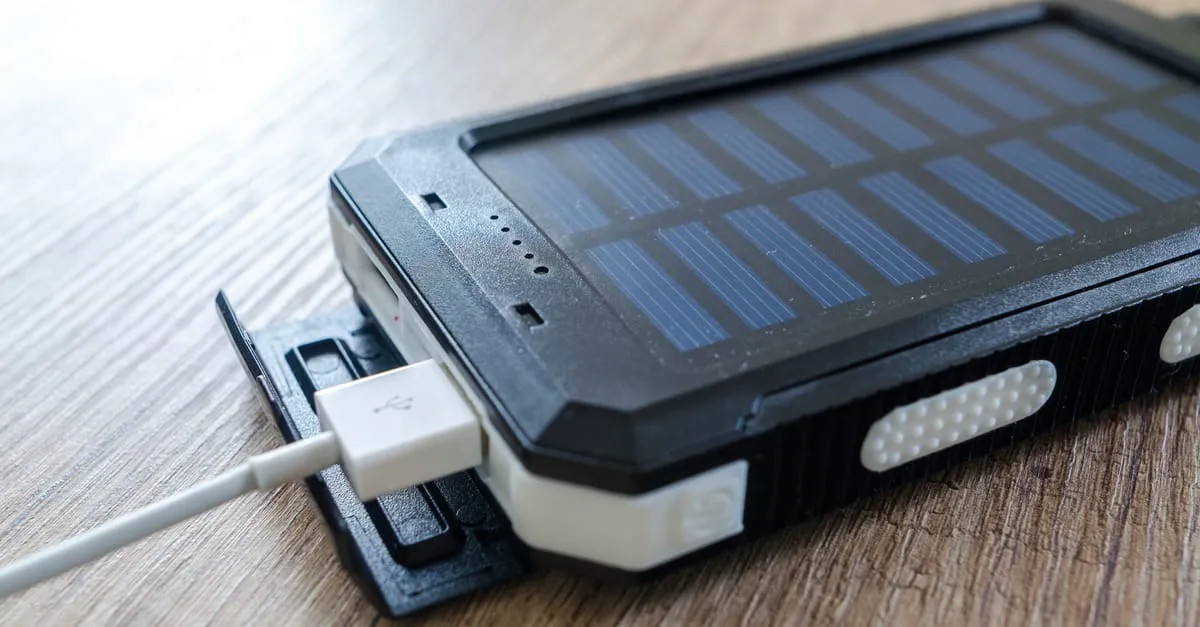
Watts vs Watt-Hours: The One Thing That Makes It All Click
This is the concept that confuses everyone, and once it clicks, the whole rest of the article is just arithmetic.
Watts (W) measure power. That’s how much electricity a device pulls at any given moment. A phone charger pulls about 5 to 10 watts. A space heater pulls about 1,500 watts. Watts tell you how hard a device is working right now.
Watt-hours (Wh) measure energy. That’s power over time. Watt-hours equal watts multiplied by hours. A 100-watt device running for 5 hours uses 500 watt-hours. The same 100 watts running for 1 hour uses 100 watt-hours.
Here’s the analogy I use. Watts are like the speed your car is going. Watt-hours are like the size of your gas tank. A faster speed (more watts) drains the tank faster. A bigger tank (more watt-hours) lets you go longer before you run dry.
A power station has both numbers, and they do different jobs:
- The capacity is in watt-hours. This is the size of the tank. A “1,000Wh” station stores roughly 1,000 watt-hours of energy.
- The output is in watts. This is how fast the station can hand out power. It has a continuous rating (what it can sustain, say 1,000W) and a higher surge rating (a brief burst, say 2,000W, for the split second a motor starts up).
You need to check both. A huge battery with a weak inverter can’t run a microwave. A strong inverter with a tiny battery runs the microwave for two minutes and dies. You’re matching the watts to what you want to run at once, and the watt-hours to how long you want to run it.
A Device Wattage Table
Here are realistic running numbers for common devices. Motors and compressors also have a surge, which is the spike of power they pull for the first second or two when they start. That surge column is the one that trips people up, so I’ve called it out.
| Device | Running watts | Startup surge |
|---|---|---|
| Phone charger | 5-10 W | none |
| Laptop | 50 W | none |
| LED light bulb | 10 W each | none |
| WiFi router / modem | 10 W | none |
| CPAP machine (no humidifier) | 30-60 W | none |
| TV (LED, mid-size) | 100 W | small |
| Refrigerator (running) | 80-200 W | 600-1,200 W |
| Chest freezer | 80-150 W | 600-1,000 W |
| Microwave | 1,000 W | none |
| Coffee maker | 800-1,200 W | none |
| Space heater | 1,500 W | none |
| 1/2 HP well pump | ~1,000 W | 2,000 W+ |
A few things worth saying out loud. The fridge only pulls its running watts when the compressor is actually cycling, which is maybe a third of the time, so its real all-day energy use is much lower than the headline number. The well pump is usually 240 volts and most portable stations only output 120 volts, so it’s often a no-go (more on that in the well pump backup power guide). And anything that makes heat (microwave, coffee maker, heater) is a watt monster. For an appliance-by-appliance walkthrough of these cases, furnace and sump pump included, see what a portable power station can actually run.
How to Do the Sizing Math, Step by Step
There are two separate checks. Don’t skip either one.
Step 1: Check the watts. Add up the running watts of everything you want to run at the same time. Then check that your biggest motor’s surge, added on top, still fits under the station’s surge rating. The total must sit under the station’s continuous output, and the peak moment must sit under its surge output.
Step 2: Check the watt-hours. Estimate how many hours each device runs over the period you care about. Multiply watts by hours to get watt-hours, add them up, and that’s the capacity you need. Then add a cushion, because you never get 100% of the rated capacity (more on that below).
A Worked Example: Fridge, Lights, and Phones for a Day
Let’s size a station to get one household through a 24-hour outage with the essentials. Say you want a refrigerator, four LED lights running in the evening, a WiFi router all day, and phone charging.
First, the watts check. The only thing here with a real surge is the fridge. Its compressor might pull a 900W surge for a second, on top of, say, a router at 10W and a couple of lights at 20W. So the peak moment is roughly 930W. That means any station rated for at least 1,000W continuous with a 1,500W+ surge handles it comfortably. A weak 300W station would not.
Now the watt-hours check. This is where you estimate hours of actual use:
| Device | Watts | Hours/day | Watt-hours/day |
|---|---|---|---|
| Refrigerator (cycles ~1/3 of the time) | 150 W average while running | ~8 effective hours | ~1,200 Wh |
| 4 LED lights | 40 W total | 5 hours | 200 Wh |
| WiFi router | 10 W | 24 hours | 240 Wh |
| Phone charging (2 phones) | 10 W | 4 hours | 40 Wh |
| Total | ~1,680 Wh |
So a single day of these essentials needs roughly 1,680 watt-hours. The fridge is the big eater, which is almost always the case. If you want to cover this load, a station around 2,000Wh gives you the day with margin to spare. A 1,000Wh station gets you most of a day, or a full day if you keep the fridge door shut and ration the lights. That tradeoff is exactly what I cover in how to keep your fridge running during a power outage.
The Capacity Tiers and What Each One Really Runs
Here’s how the market breaks down, with example products and rough prices. Treat every price as approximate. They move with sales and new model releases. For specific models in each tier, see the portable power stations we recommend.
~300 Watt-Hours (Small)
This is the phones, lights, and laptop tier. Think Jackery Explorer 300 or similar, usually a mid-range buy. It will charge a phone a couple dozen times, run a CPAP for a night, keep a router and a few lights going, and top off a laptop several times. It cannot meaningfully run a fridge, and it will choke on anything that makes heat. Great as a grab-and-go for camping or a short blip outage. Not a home backup.
~1,000 Watt-Hours (The Sweet Spot for Most People)
This is the fridge-for-a-day, CPAP-all-night, lights-and-devices tier. The EcoFlow Delta 2 and Jackery Explorer 1000 live here, a premium buy. Output is usually around 1,000 to 1,800W continuous with a surge high enough to start a fridge. This is what I point most people toward for outage prep, because it covers the essentials that actually matter and it’s still light enough to carry and store easily.
~2,000 to 4,000 Watt-Hours (Whole-Essentials)
This is the keep-the-essentials-running-for-a-day-or-two tier, and many of these accept expansion batteries to go even bigger. The Bluetti AC200L and EcoFlow Delta Pro sit in this range, a high-end buy. Output is typically 2,000 to 3,600W continuous, enough to run a fridge and a microwave and lights at the same time. If you want real resilience through a multi-day outage, or you want to occasionally run heavier loads, this is the tier.
The Surge-Watts Trap
This is the mistake I see most, and it’s worth its own section.
A station advertised as “1,000W” tells you its continuous output. But anything with a motor or compressor, a fridge, a freezer, a well pump, a power tool, a sump pump, pulls a much larger burst of power for the first second or two when it kicks on. That burst is the surge, and it can be two to six times the running wattage.
So a fridge that runs at 150 watts might demand a 900-watt surge to start its compressor. A circular saw rated at 1,200 watts might surge to 2,400. If the station’s surge rating can’t cover that spike, it shuts off to protect itself, and your fridge never starts. The running number was never the problem. The startup was.
When you size, always check the surge column for your motor loads, not just the running watts. A station needs a surge rating that clears your single biggest startup spike with room to spare.
Inverter Efficiency: Why You Don’t Get the Full Number
One honest detail nobody likes to mention. A power station stores DC energy in its battery, but your household devices run on AC. The inverter that converts DC to AC isn’t perfectly efficient. It loses roughly 10 to 15% as heat.
That means a “1,000Wh” station gives you maybe 850 to 900 watt-hours of actual usable energy at the AC outlets. It’s not the manufacturer cheating, it’s physics. Just build it into your planning. When I size a station, I mentally knock about 15% off the rated capacity before I trust the number. So my 1,680Wh example load above really wants a station rated closer to 2,000Wh to cover it comfortably with that loss baked in.
Solar Recharge Basics
A power station is just a battery. Once it’s empty, it’s a paperweight until you refill it. You have three ways to do that:
- Wall outlet. Fastest, but useless during the outage you bought it for.
- Car (12V). Slow, but a real lifeline if the grid is down and you can run the engine.
- Solar panels. The one that makes a station truly self-sufficient.
Solar matters most for any outage longer than about a day. With enough panel wattage, you recharge during daylight and run loads through the night, which effectively makes your capacity unlimited as long as the sun comes up. The catch is that panel output in the real world is well below the rated number (clouds, angle, time of day), so it always takes longer than the spec sheet suggests. I walk through panel sizing and setup in the small home solar setup guide. If you think you might ever face a multi-day outage, buy a station that supports solar input from day one, even if you don’t buy panels right away.
What I Would Buy for a Typical Outage Kit
If you asked me to spec one kit for a typical household that wants to ride out a power outage in reasonable comfort, here’s exactly what I’d do.
Get a station in the 1,000 to 2,000Wh range with at least 1,500W continuous output and a surge rating that comfortably starts a fridge. That single box keeps your refrigerator cold, your phones charged, your router up, and a few lights on, which is genuinely most of what matters when the power’s out. It’s also light enough that you’ll actually store it somewhere accessible instead of burying it in the garage.
Add a solar panel that the station supports, even just one 100W to 200W panel, so a long outage doesn’t end the moment the battery hits zero.
Then build the watt-hour table for your own home before you commit. If your list comes out under 800Wh a day, save your money and go smaller. If you’re trying to cover a well pump, central heat, or an electric range, a portable station is the wrong tool and you should be looking at a standby generator or a wired-in home battery instead.
Size to your numbers, not to the biggest box on the shelf. The right station is the smallest one that covers what you actually need.