
On this page · 7 sections
I have lost power enough times living where I do that keeping the fridge cold is no longer something I think about. I have a plan, the gear sits ready, and when the lights go out I know exactly what I am going to do. The first few outages, though, I had no idea. I learned the hard way that a cooler full of melting ice and a panicked trip to the store at 11pm is not a plan.
Short answer: for most people in most outages, a battery power station (often sold as a solar generator) is the right tool. It is silent, it runs safely indoors with no fumes, and a mid-size unit will carry a typical fridge through a day or more. If you face long outages, want to run more than the fridge, or live somewhere storms knock out power for days, a gas or propane generator makes more sense, with some real safety rules attached. Here is the whole thing.

First, How Long Is Your Food Actually Safe?
Before you spend a dollar on backup power, know this: your fridge and freezer hold cold for a while on their own. You may not need to do anything for the first few hours.
The numbers most food safety sources agree on are simple. A refrigerator keeps food safe for about 4 hours without power, as long as you keep the door closed. A full freezer holds a safe temperature for about 48 hours, and a half-full freezer for about 24 hours, again with the door shut.
That word “closed” is doing a lot of work. The single most important thing you can do in a short outage costs nothing: stop opening the door. Every time you open it, cold air falls out and warm air rushes in, and the clock speeds up. If you know the power will be back in an hour or two, the best move is to leave both doors shut and walk away.
The 40 degree Fahrenheit line is the one that matters for the fridge. Once perishable food (meat, dairy, eggs, leftovers, cut produce) sits above 40 degrees for more than 2 hours, you should throw it out. A cheap fridge thermometer takes the guesswork out of this. Buy one, leave it in the fridge, and you will know exactly where you stand instead of guessing.
How Much Power a Fridge Actually Needs
This is where most people get tripped up, and where buying the wrong thing wastes real money. A fridge does not draw steady power. You need to understand three different numbers.
Running watts. When the compressor is actually running, a typical home refrigerator draws somewhere around 80 to 200 watts. That is the steady load while it is cooling.
Startup surge. Here is the part the spec sheet on the back of the fridge does not tell you. The instant the compressor motor kicks on, it pulls a brief spike of roughly 600 to 1200 watts, and some units spike up to around 1500 watts. This surge lasts only a second or so, but your power source has to be able to deliver it. If it cannot, the fridge will not start, or it will trip the power station’s overload protection. This is the number that actually determines whether a power source can run your fridge, not the running watts.
Daily energy use. Because a fridge cycles on and off all day rather than running constantly, what matters for sizing a battery is total energy over time, measured in watt-hours (Wh). A typical fridge uses somewhere around 1 to 2 kWh per day, which is 1000 to 2000 watt-hours.
Watts and watt-hours are not the same thing, and mixing them up is the most common mistake here. Watts measure power, the instantaneous rate of draw. Watt-hours measure energy, how much total work gets done over time. A power station is rated both ways: its output in watts (how much it can push at once, with separate continuous and surge ratings) and its capacity in watt-hours (how much energy it stores). You need the output rating to be high enough to handle the surge, and the capacity to be big enough to last the outage.
Here is a worked example. Say your fridge runs at 120 watts, surges to 1000 watts on startup, and uses about 1.5 kWh (1500 Wh) over a full day. To run it you need a power station that can handle the 1000 watt surge (so a unit rated for at least 1000 to 1500 watts of surge output) and that stores enough energy to cover the day. A power station with around 1000 Wh of usable capacity would run that fridge for roughly a day if you are careful, since real-world losses mean you never get 100 percent of the rated capacity. A 2000 Wh unit gives you comfortable cushion, closer to a day and a half or two days.
Option 1: A Battery Power Station (Solar Generator)
For most households, this is what I recommend, and it is what I reach for first.
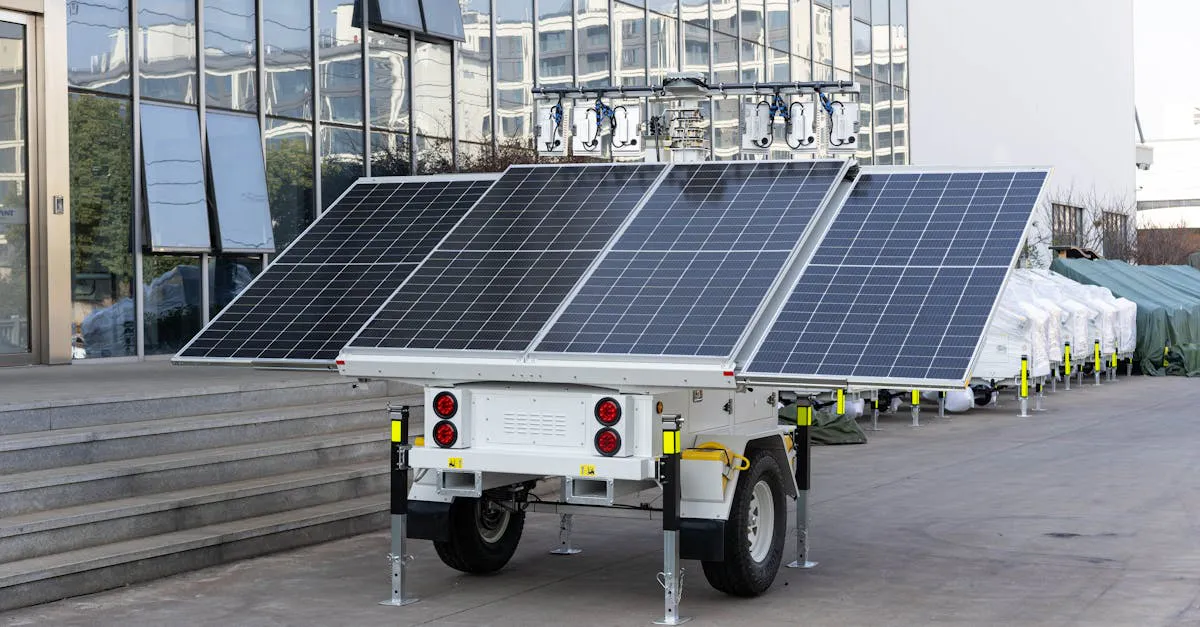
A battery power station is a big lithium battery in a box with AC outlets, USB ports, and usually a 12V socket. “Solar generator” is just marketing for the same thing bundled with the option to recharge from solar panels. It makes no noise, produces no exhaust, and is completely safe to run inside your kitchen next to the fridge. That last point is the whole reason it beats a gas generator for this job. You plug the fridge straight into it and forget it is there. (Curious what else the same battery can carry? See what a portable power station can actually run.)
Sizing One for a Fridge
Match the two ratings to your fridge. The surge output must clear your fridge’s startup spike, so look for a continuous rating of at least 1000 watts and a surge rating around 1500 watts or more. Most mid-size and larger units handle this without trouble. The capacity then determines runtime: roughly 1000 Wh gets you about a day on a careful fridge, and 2000 Wh or more buys real breathing room.
Real units people actually buy, drawn from the portable power stations we recommend:
- EcoFlow Delta 2 (around 1000 Wh, expandable) is a premium pick. A solid one-fridge-for-a-day choice.
- Jackery Explorer 1000 (around 1000 Wh) is a premium pick depending on bundle and sales.
- Bluetti AC200L (around 2000 Wh) is a high-end pick and gives you the bigger cushion.
- Jackery Explorer 2000 and EcoFlow Delta Pro sit in the 2000 to 3600 Wh range and are high-end picks. These start to cover a fridge plus other loads for longer stretches. Torn between the two big brands? Our Jackery vs. EcoFlow comparison settles the differences that matter for outage duty.
- Anker SOLIX units span this whole range and are worth comparing on price.
If you want to recharge during a long outage, add a solar panel or two. On a sunny day, a few hundred watts of panel can replace a good chunk of what the fridge pulls, which can stretch a power station from one day to indefinite. The catch is obvious: no sun, no recharge.
I go deep on matching capacity to your specific loads in my guide on what size power station do I need. If you are also worried about water during an outage, the well pump backup power guide covers that load, which is a much hungrier one than a fridge.
The Pros
Silent, so you can sleep. Safe indoors, no carbon monoxide, no fumes, no fuel to store. Zero maintenance between outages. Recharges from a wall outlet, your car, or solar. For a fridge in a short to medium outage, it is hard to beat.
The Cons
It is finite. When the battery is empty, it is empty, and without solar or a way to recharge, that is the end. It also costs more per watt-hour of capacity than a generator costs per watt of output, so for very long or whole-house needs the math tips toward a generator.
Option 2: A Gas or Propane Generator
When outages run for days, or you want to run more than just the fridge, a fuel generator is the workhorse. A modest one will run a fridge and then some, and you refuel it instead of waiting for the battery to drain.
For a fridge, you do not need a giant unit. A 2000 watt inverter generator comfortably handles a fridge plus lights and phone charging. A 3500 to 5000 watt unit covers a fridge, a few rooms, and maybe a window AC or a sump pump. Dual-fuel models that run on gasoline or propane give you flexibility on fuel, which matters when gas stations are also without power. Realistic options include Westinghouse and Champion dual-fuel units, which are premium picks for the 3000 to 5000 watt range, and small inverter generators that are also premium picks.
The Pros
Run time is limited only by fuel, so you can keep going for days. High output for the price, enough to run a fridge plus other things. Refueling beats waiting for a battery to recharge.
The Cons
Loud. Produces deadly exhaust, so it lives outside in all weather. Requires fuel storage, which has its own safety and shelf-life concerns. Needs maintenance, oil changes, and periodic test runs. And you cannot run it safely indoors, which is a real limitation if your fridge is far from any spot where a generator can sit outdoors.
Option 3: Just Keep the Freezer Cold
Sometimes the smartest move is to not power anything at all, especially for the freezer, which holds cold far longer than the fridge.
Remember the timelines: a full freezer holds about 48 hours closed, a half-full one about 24. You can stretch that with a few tricks.
Pack it tight. A full freezer stays cold longer. If yours is half empty, fill the gaps with jugs of water or bags of ice before storm season. Frozen mass holds temperature.
Add regular ice. Bags of ice from the store, packed into the fridge and around freezer contents, buy you time cheaply. A cooler full of ice can hold your most perishable fridge items (milk, meat, leftovers) for a day or two so you can leave the fridge itself shut.
Use dry ice for the long haul. Dry ice is the heavy hitter. Roughly 15 to 20 pounds of dry ice can keep a full freezer cold for about 24 hours. Handle it with gloves, never bare hands, and never seal it in a fully airtight space, because it sublimates into carbon dioxide gas and needs somewhere to vent. Place it on a layer of cardboard on top of your frozen food, not directly on the items.

This option pairs well with the others. Use ice and a tight freezer to ride out the first day, and bring in a power station or generator only if the outage drags on.
How to Stretch a Battery as Far as It Goes
If you are running a fridge off a power station and you do not know how long the outage will last, you want to make that battery last. A few habits make a real difference.
Let the fridge cycle, do not fight it. A fridge only draws power when the compressor runs, which is a fraction of the time. You do not need to keep the power station running every minute. One effective approach is to run the fridge off the battery for part of the day to bring it down to temperature, then unplug it and let it coast on its own cold for several hours with the door shut, then plug back in. A fridge that started cold can hold for hours without power. Cycling it like this can roughly double how long your battery lasts.
Turn the thermostat down before the outage, if you see it coming. If a storm is forecast, set the fridge and freezer a notch colder ahead of time. Pre-chilling everything gives you a bigger buffer of cold to coast on.
Minimize door openings. Same rule as always. Decide what you need, open once, grab it, close it. A “fridge inventory” note on the door helps you avoid standing there with it open deciding.
Run only the fridge. When the battery is your lifeline, do not also charge laptops and run lights off the same unit unless you have the capacity to spare. Keep the power station dedicated to the cold.
What I Actually Recommend for a Typical Small Household
If you have a single fridge, a small house, and the occasional outage that lasts a few hours to a day or so, here is what I would do.
Buy one mid-size battery power station in the 1000 to 2000 Wh range, with a surge rating of at least 1500 watts so it starts the fridge without complaint. Something like an EcoFlow Delta 2 or a Jackery Explorer 1000 at the smaller end, or a Bluetti AC200L or Jackery 2000 if you want the bigger cushion and can spend more. Keep it charged and stored where you can grab it. Add a fridge thermometer and a couple of frozen water jugs in the freezer, and you have covered the vast majority of outages most households ever see.
Add a generator only if your reality calls for it: multi-day outages, a need to run a well pump or sump pump or medical equipment, or a house in an area where the power goes out for days at a time. If that is you, a dual-fuel generator in the 3500 to 5000 watt range plus a proper transfer switch installed by an electrician is the long-haul answer. Just respect the carbon monoxide and backfeeding rules without exception.
For most small-property folks, though, the silent battery in the corner is the one that actually gets used, because it is the one you can run inside without thinking twice. If you want to take the next step and build out real backup power for the whole house, my guide on a small home solar setup walks through pairing panels and batteries into something that carries you through long outages.