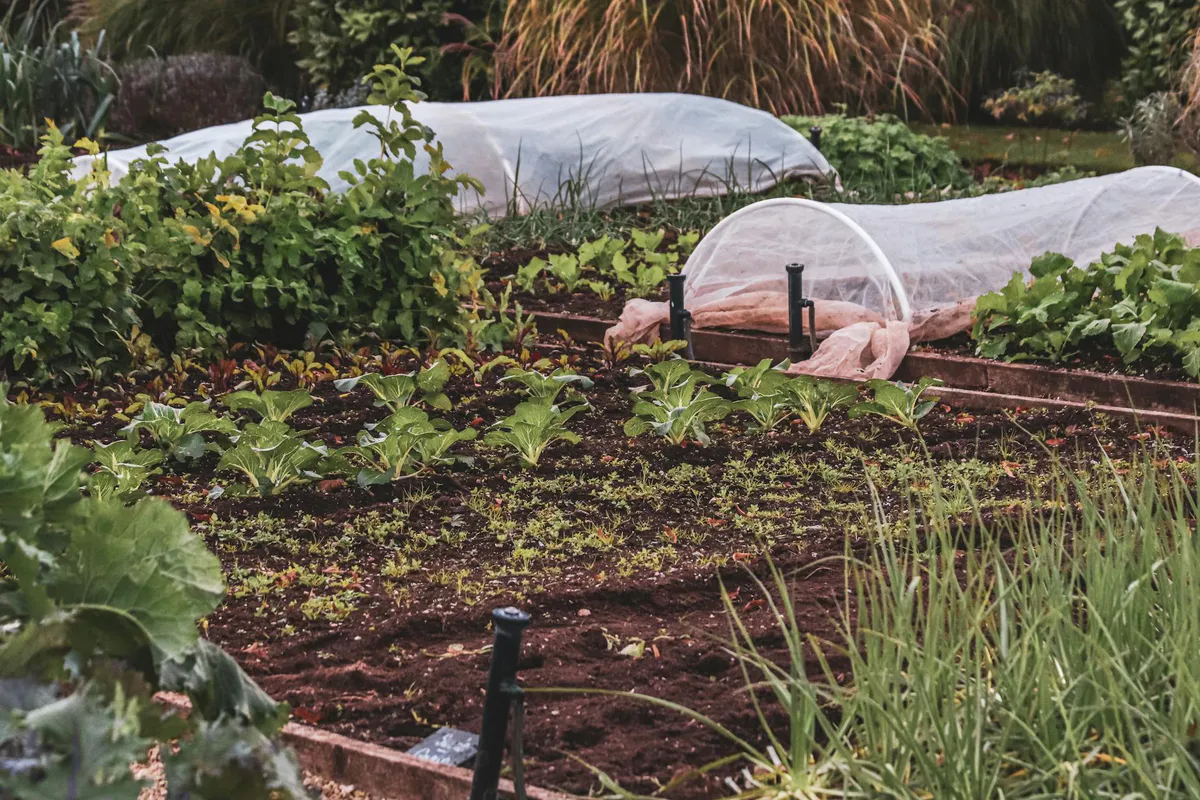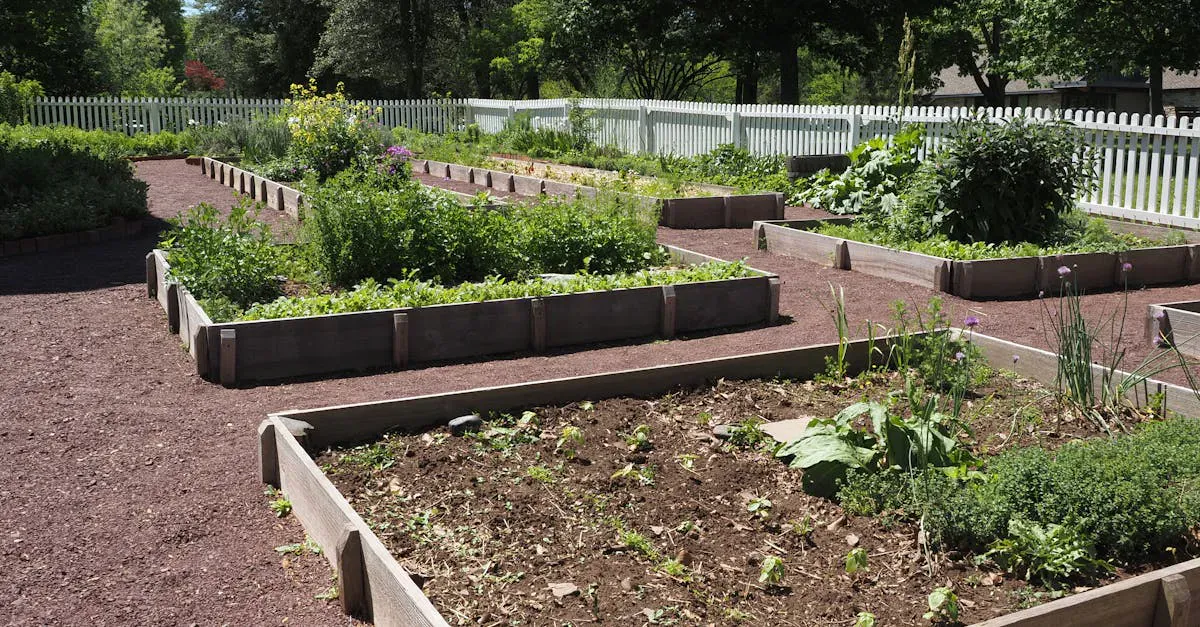

On a small property, your hands do most of the gardening. You’re not running a tractor through acres of row crops. You’re kneeling next to a raised bed, transplanting seedlings, pulling weeds out of tight spaces, and pruning back a tomato plant that’s getting out of hand. The right hand tools make all of that faster, easier, and a lot less hard on your joints.
A common trap is buying a 20-piece tool set from the hardware store. You get a flimsy trowel, a bent cultivator, and a pair of gloves that fall apart in a season. Then you replace them every year. Buy fewer, better tools once and you’ll still be using them in a decade.
Here’s the core kit for a small-property gardener. A trowel for digging planting holes. A hori-hori knife for everything in between, including digging, weeding, and dividing. A pair of bypass pruners for cutting stems and branches. A dedicated weeder for getting under taproots. A good pair of gloves that you’ll actually wear. And a transplanter for moving seedlings and bulbs without crushing the roots. That’s six tools that cover most of what you’ll do in a small garden.
A few things to look for across all of them. Solid heads matter. Cast aluminum, forged steel and high-grade stainless hold up. Stamped sheet metal bends. Ergonomics matter more than they sound. A handle that fits your hand and keeps your wrist neutral is the difference between an enjoyable afternoon and a sore forearm. Buy for the work you actually do. A market gardener and a weekend hobbyist need different tools, and that’s fine.
Fiskars Ergo Garden Trowel
A trowel is the tool you reach for more than any other, so it pays to get one that won’t let you down. The Fiskars Ergo is an easy first trowel for anyone starting out. It costs very little, and its head avoids the weak point of cheap trowels.
The head is one piece of cast aluminum, not stamped sheet metal. That distinction matters. Cheap stamped trowels can bend at the neck when you lever against a root or a rock. A one-piece cast head has no thin neck to fold, and aluminum won’t rust even if you leave it out in the rain (which you will, eventually).
The handle is where the “Ergo” name comes from. It’s contoured to fill your palm and keep your wrist in a neutral position, which is meant to reduce the strain that builds up over an hour of digging. There’s a soft grip insert and a hang hole at the end for storage.
The downsides are minor. There are no depth markings on the blade, so if you want precise planting depths you’ll be eyeballing it. And the handle is on the chunky side, which is great for larger hands but a little bulky if your hands are small. For the price and durability, those are easy trade-offs.
Skip it if you already own a hori-hori; it covers most trowel jobs. The tradeoff is a chunky handle with no depth marks.
Nisaku NJP650 Hori-Hori Knife
If you buy one tool from this list, make it the hori-hori. This Japanese soil knife is one of the most versatile hand tools in gardening, and Nisaku sells the NJP650 as “The Original Hori-Hori.” It digs, it weeds, it divides perennials, it cuts twine and roots, and it transplants. Carry one, and many of your other tools can stay in the shed.
The blade is 7.25 inches of Japanese stainless steel, slightly concave so it can move loose soil when you need it to. One edge is straight and sharp for slicing roots and cutting through sod. The other edge is serrated for sawing through tougher roots and twine. There are inch markings stamped into the blade so you can set bulbs and transplants at the right depth. Stainless steel resists rust.
What makes it shine on a small property is the precision. In a tight raised bed where a full-size trowel is clumsy, the narrow blade slips between plants to pop out a weed or carve a planting slot. Dividing a clump of perennials? Drive the blade straight down and lever the clump apart. It replaces a trowel, a weeder, a soil knife, and a small saw.
The sheath that comes with it is functional but basic for a tool at this price, and there’s no drainage hole if you wash it. The edge also needs an occasional pass with a sharpening stone to stay at its best. Neither is a real complaint. With basic care, there’s little on it to wear out.
Skip it if young kids garden with you; both edges are sharp. The tradeoff is a blade that needs its sheath and a little care.
Felco F-2 Bypass Pruners
Pruners are where going cheap costs the most. A dull, sloppy pair crushes stems instead of slicing them, which invites disease and stresses the plant. Felco has made the F-2 since 1948, and it’s a long-standing choice among landscapers and orchardists.
These are bypass pruners, which means the sharp blade passes by a curved anvil like scissors, leaving a clean cut. (Anvil pruners crush the stem against a flat surface and are only for deadwood.) The F-2’s hardened steel blade cuts cleanly through green stems and woody branches up to about an inch thick. The forged aluminum handles are light but stiff, with a wire cutting notch and a sap groove that keeps them from gumming up.
What makes them a long-term buy is that every single part is replaceable. The blade, the anvil, the spring, the adjustment nut, even the handles. When the blade finally wears out from years of sharpening, you buy a new one and rebuild the tool instead of throwing it away. Felco also backs the F-2 with a lifetime warranty.
The only real downside is the price. They cost much more than a hardware-store pair. And Felco makes ergonomic and smaller-handed versions (the F-6, F-8) that some people prefer, but the classic F-2 is the standard for a reason. If you prune anything regularly, this is a pair you can keep for years.
Skip it if you prune a few times a year; a budget bypass pruner will do. The tradeoff is a high upfront cost for a tool you can rebuild.
CobraHead Original Weeder & Cultivator
The CobraHead looks strange the first time you see it. It’s a single curved steel tine on a stubby handle, like a bent finger. That shape is exactly the point. It’s our pick for a dedicated weeding tool, and it’s made in Cambridge, Wisconsin, by a small company built around this design.
The forged steel blade slides into the soil at an angle and hooks under weed roots, so you can pull them out whole rather than breaking them off at the surface. The curve lets you work around the base of plants without disturbing them, and you can flip it to use the edge for cutting furrows, marking rows, edging beds, or breaking up crusted soil. On a small property where you’re weeding by hand anyway, that’s the job you want a tool built for.
The handle is made from recycled plastic and shaped to let you pull with your whole arm rather than pinching with your fingers, which is easier on your hand over a long weeding session. It’s a tool that rewards a little technique.
There’s a learning curve, and the bare steel blade will surface-rust if you put it away wet, so wipe it down. Neither matters much once you’re using it daily. For a budget-friendly tool with a forged steel blade and a molded composite handle, it’s an easy recommendation.
Skip it if you already weed with a hori-hori; the two overlap. The tradeoff is a short learning curve and a blade you must keep dry.
Foxgloves Original Gardening Gloves
The best garden gloves are the ones you’ll actually wear. Stiff leather or coated work gloves kill dexterity, so a lot of gardeners end up working bare-handed and scratching up their hands. The Foxgloves Original is built to solve that with a thin, stretchy glove made to fit close.
These are made from a nylon and Lycra blend with four-way stretch and a snug, close fit, so you keep far more fingertip feel than in work gloves. That’s what lets you pluck a seedling, thread a tie, or pinch off a sucker without taking them off. The tight knit keeps soil out from under your nails and the long cuff protects your wrists and forearms from scratches. They’re machine washable, so they don’t turn into crusty cardboard after a muddy day.
They’re not armor. The fabric is for dexterity, not for handling thorns, rocks, or wet soil for hours. For pruning roses or moving brush you’ll want something tougher. But for the detail work that fills most of a small-property gardener’s time (planting, potting, weeding, harvesting) they’re our pick.
Two notes on sizing. They’re cut to fit snugly, and Foxgloves sizes them by hand circumference, so measure before you order. And the fit is based on a women’s glove, but the larger sizes suit bigger hands too. Treat them as your everyday glove and keep a heavy pair around for the rough jobs.
Skip it if you work around roses or brambles; get leather gauntlets. The tradeoff is finger feel over protection.
Radius Garden 101 Ergonomic Transplanter
A transplanter is a narrow trowel built for one job: moving small plants without wrecking their roots. If you start seeds, buy six-packs of starts, or plant bulbs, the Radius Garden 101 makes that work cleaner and faster than a standard trowel can.
The blade is narrow and deep with a scooped profile, sized to slip alongside a seedling, lift it with its root ball intact, and set it into a planting hole. The tip is shaped to pop tender starts out of plastic cell packs without tearing the roots, a small detail that matters on planting day. Depth markings stamped into the aluminum blade let you set bulbs and transplants at a consistent depth. The aluminum is rust-proof and, per Radius, stronger than the steel on comparable tools.
The signature feature is the handle. Radius calls it the Natural Radius Grip, an O-shaped loop you grab with your whole hand instead of a straight handle you pinch. It’s designed to give you leverage while keeping your wrist straight, which is worth considering if you have arthritis, weak grip, or carpal tunnel. It’s one of the few tools designed around the hand rather than the other way around.
The narrow blade that makes it good for transplanting also makes it a poor general scooper, so this isn’t a one-tool replacement for a trowel. And a smooth molded grip can get slick when it’s caked in wet mud. For the specific job of transplanting starts and bulbs, though, it’s the most specialized tool on this list.
Skip it if you rarely move seedlings or bulbs; a trowel does the job. The tradeoff is a narrow blade that is poor for general scooping.
How We Picked These
We chose these picks from maker specs and materials. See how we review.
One tool per job, no filler. We built a core kit rather than a giant set. Each pick is the tool we’d choose for that task, not a bundle padded out with things you’ll never use.
Material quality. Cast and forged steel, high-grade Japanese stainless, and rust-proof aluminum got priority. We passed over stamped sheet-metal tools that bend the first time you hit a root.
Ergonomics for real sessions. Small-property gardening means long stretches of kneeling and hand work. Handles that keep the wrist neutral and reduce grip strain mattered as much as the business end of the tool.
Value over a decade. We favored tools that last years and, where possible, can be sharpened or rebuilt instead of replaced. A pair of Felcos you can sharpen and rebuild beats a cheap pair you replace every season.
Frequently Asked Questions
Before You Buy
Good tools are only worth it if you have something to dig in. If you’re still setting up, start with the garden first:
- Starting a backyard food garden. The groundwork before you ever pick up a trowel.
- An eighth-acre garden layout. How to plan beds and paths on a small lot.
- The best compost setup for small yards. Feed the soil your new tools will be working.
To complete the setup, pair these hand tools with the raised bed kits you’ll build and tend, and a garden cart to haul soil, compost, and debris around the yard.
Bottom Line
For most small-property gardeners, the Nisaku NJP650 hori-hori is the single best tool you can own. It does the work of several others, and with basic care there’s little on it to wear out. Pair it with the Fiskars Ergo trowel for everyday digging and the Felco F-2 pruners for clean cuts, and you’ve got the backbone of a kit built to last for years.
Add the CobraHead weeder if hand weeding is your least favorite chore, the Radius Garden 101 transplanter if you grow from seed or plant bulbs, and a pair of Foxgloves so you’ll actually keep your gloves on. Six tools, bought once, and your hands and your back will thank you every season.