
This guide covers composters for a small yard: outdoor tumblers and bins, plus a worm bin and a bokashi bin for food scraps when outdoor space is tight. A kitchen countertop caddy is a different product. It holds scraps for a few days until you carry them out; it does not turn them into compost.
You may not need to buy anything. If you mostly compost leaves and garden trimmings and have a spare corner, an open pile or a simple homemade bin can do the job. Our compost bin vs tumbler guide covers the pile option alongside the two main container styles. A closed bin or tumbler earns its place when you want to add food scraps near the house or the neighbors, or when rats and raccoons are a local problem. For a plan built around your space, start with the best compost setup for small yards.
Each type solves a different problem. Tumblers keep food scraps enclosed and off the ground, and turning takes a spin instead of a pitchfork. Open bins hold the most leaves and garden waste at a budget price. Worm bins turn kitchen scraps into castings indoors, year-round. Bokashi bins ferment cooked food, meat and dairy that the others should not take.
Compare footprint, capacity, pests and upkeep
Four things decide whether a composter works in a small yard. Footprint is the ground or floor space it takes, plus room to open, turn and empty it. Capacity is how much it holds at once. Pests means what the design keeps out and what it does not. Upkeep is the turning, draining, feeding and supplies it needs to keep working.
| Pick | Footprint | Capacity | Pests | Upkeep | Skip it if |
|---|---|---|---|---|---|
| VIVOSUN Dual-Chamber Tumbler | 26.25 x 23.6 in, 36.5 in tall | 43 gal total, split across two chambers | Raised and closed: keeps out most animals, not insects | Turn regularly; balance greens with dry browns; heavy when full | Most of your waste is leaves or bulky garden debris |
| Envirocycle Composter | 19 x 18.75 in, 21.5 in tall (the Mini) | 65 L (about 17 gal) drum over a 1 gal base | Closed drum with a snap-latch door: keeps out most animals, not insects | Turn by hand every few days; drain the base | You need more than 17 gal, or don’t want hot pink (the linked color) |
| GEOBIN Expandable Bin | 24 to 44 in across, 36 in tall, plus room to work | 70 to 246 gal | Open top and bottom: keeps out nothing | Turn with a fork now and then; slow if left alone | You want to add food scraps |
| Worm Factory 360 | About 18 x 18 in | 4 stacking trays, expands to 6 | Lidded and kept under cover: out of most animals’ reach; fruit flies if scraps sit exposed | Buy worms; feed and check moisture; keep bedding at 40°F to 80°F | Your waste is mostly yard waste, or you won’t look after live worms |
| SCD Probiotics Bokashi | 12 x 12 in, 16 in tall | One 5 gal bin | Airtight lid, kept indoors | Coat each layer with bran; drain often; ferment two weeks; bury the output | You have no garden soil or compost pile to finish the output |
VIVOSUN Dual-Chamber Compost Tumbler
The VIVOSUN suits a small yard with a steady mix of kitchen scraps and garden trimmings. The dual-chamber design is the key feature. While one side finishes, you add fresh material to the other. When the finished side is ready, you empty it and switch, so you always have a batch in progress.
Footprint. About 26.25 x 23.6 inches on the ground and 36.5 inches tall, on a galvanized steel frame that keeps the barrel at a comfortable loading height. Leave room in front to open the doors and set a bucket or wheelbarrow underneath.
Capacity. 43 gallons in total, split between the two chambers. A yard that produces a lot of leaves and grass clippings will fill it quickly, so plan on a second home for overflow, such as the GEOBIN below.
Pests. A closed barrel held off the ground keeps out most animals, as long as the doors close fully and there are no gaps. It is not insect-proof. An Oregon State University Extension answer on compost tumblers describes raised tumblers as “animal-proof, but not insect-proof.”
Upkeep. Spinning the barrel replaces forking a pile, and VIVOSUN lists adjustable air vents and internal fins to help air move through the mix. Balance kitchen scraps with dry browns (see the tip below), and expect the barrel to get heavy when it is full of wet material.
Speed. VIVOSUN promises finished compost “in weeks,” and Envirocycle quotes 4 to 8 weeks for its own drum. Treat those as warm-weather best cases with a well-balanced mix. In the same Oregon State University Extension answer, the expert calls tumbler composting “a very slow process” and finishes batches in a turned hot pile. The answer also notes that small two-chamber tumblers are too small to hold their own heat through an Oregon winter unless they are double-walled.
Skip it if most of your waste is fall leaves and bulky garden debris, since an open bin holds far more, or if you would struggle to turn a barrel loaded with wet compost.
Envirocycle Composter
The linked listing is the Envirocycle Mini in hot pink; Envirocycle also makes it in black. It is a small, enclosed drum that sits on a base, made for a deck, patio or balcony where a full-size tumbler will not fit.
Footprint. 19 x 18.75 inches and 21.5 inches tall, the smallest outdoor footprint on this list.
Capacity. A 65-liter drum, about 17 gallons, over a 1-gallon base. The VIVOSUN holds about 2.5 times as much in the same mid-range price tier. The Mini suits a light, steady stream of kitchen scraps; it is too small for yard waste.
Pests. The drum is fully enclosed with a snap-latch door. Like other closed tumblers, it keeps out most animals but is not insect-proof, and fruit flies can find their way in while the door is open.
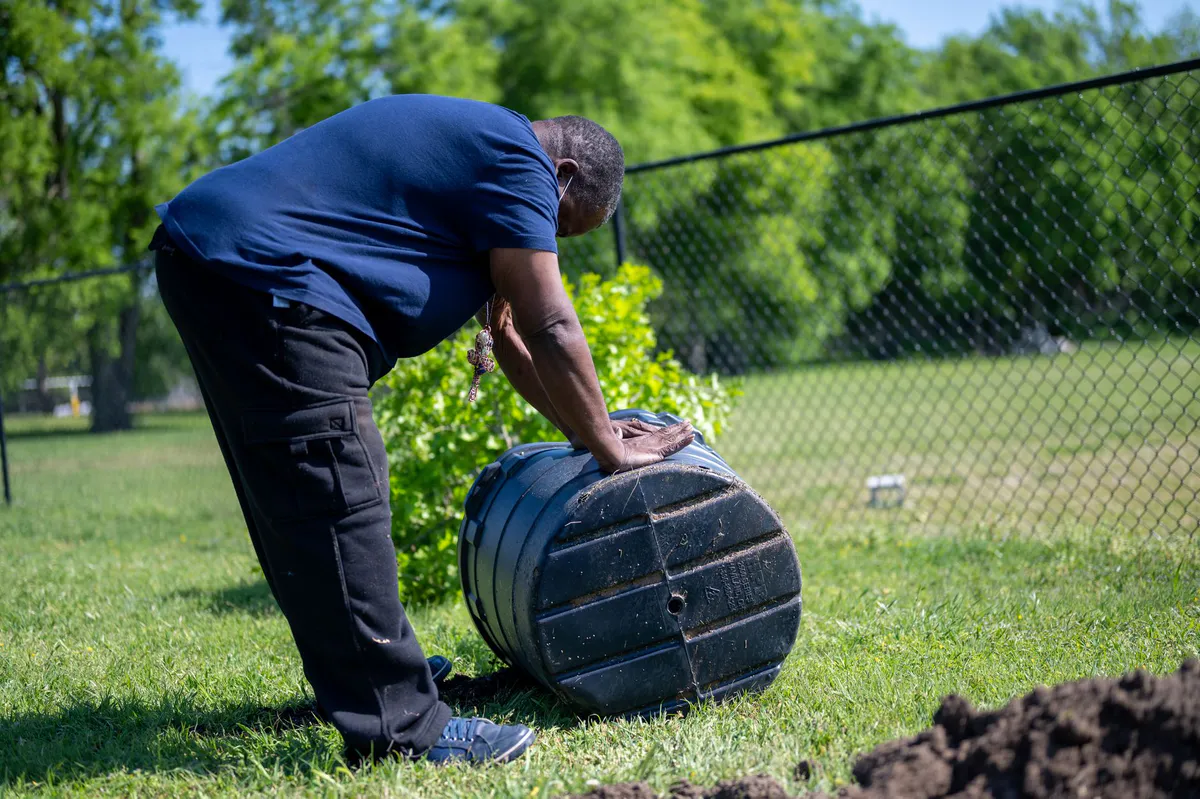
Upkeep. Envirocycle suggests three full turns every three days, gripping the grooves in the drum. Liquid drains into the base, where drain plugs let you collect it as compost tea or send it back into the pile. The drum is food-grade, BPA-free plastic, and the door opening is 12.3 x 9 inches.
Skip it if you have room for a full-size tumbler, want to compost garden waste, or would rather not have a hot pink composter on your deck. Check the color before you order.
GEOBIN Expandable Compost Bin
The GEOBIN is a sheet of perforated plastic that you roll into a ring and fasten with closure keys. There is no lid, no floor and nothing to turn. It keeps a leaf and garden-waste pile tidy; it is not a sealed container.
Footprint. Adjustable from 24 to 44 inches across, and 36 inches tall. Leave working room around it for a fork.
Capacity. The maker lists 70 gallons at the narrowest setting and 246 gallons fully opened. That makes it the largest option here by a wide margin, which matters in fall when leaves pile up.
Pests. It offers no animal protection. Raccoons, rats and dogs can reach anything inside, so keep food scraps out and use it for leaves, grass clippings and garden trimmings.
Upkeep. Turn it with a fork now and then; air also moves through the perforations. Left alone, a pile like this breaks down slowly, over months rather than weeks. To harvest, unfasten the ring, set it up beside the pile, fork the unfinished top layer back in, and shovel out the finished compost from the bottom.
Skip it if you plan to add food scraps, need the compost corner to look tidy, or want finished compost quickly.
Worm Factory 360
A worm bin turns kitchen scraps into worm castings, a fine, dark compost for potting mixes and top-dressing beds. The Worm Factory 360 does it in stacking trays on a footprint of about 18 x 18 inches, so it fits in a garage, basement or sheltered corner of a patio.
How it works. You start with bedding and worms in the bottom tray and add food scraps. When that tray is full, you add another on top. The worms move up toward the fresh food and leave finished castings below, which you harvest. The kit comes with 4 trays and expands to 6.
Capacity. It handles kitchen scraps, not yard waste. You are not going to process a bag of leaves through it. Pair it with a GEOBIN or a tumbler if you have garden waste too.
Pests and smell. With its lid on and the bin under cover, animals are rarely a problem. A well-run bin smells earthy. A sour or rotten smell usually means too much food or too much moisture, and burying scraps under the bedding helps keep fruit flies away.
Upkeep. Worms are sold separately. Nature’s Footprint suggests starting with half a pound of composting worms and says worms eat about half their body weight in food per day, so a half-pound start takes roughly a quarter pound of scraps a day. Keep the bedding between 40°F and 80°F, and drain liquid from the spigot in the base. The kit includes start-up bedding, rock dust, a hand rake and a scraper.
Skip it if your waste is mostly yard waste, you would rather not look after live worms, or you are often away for more than two weeks, which the maker gives as roughly how long worms can go without food.
SCD Probiotics All Seasons Bokashi Bucket
Bokashi is fermentation, not composting in the usual sense. You layer food scraps with bokashi bran (bran inoculated with microbes) in an airtight bin, and the scraps pickle rather than rot. What comes out is a fermented pre-compost that you bury in garden soil or mix into a compost pile to finish breaking down.
Footprint. One 5-gallon bin, 12 x 12 inches and 16 inches tall, with a spigot. It belongs on a kitchen counter or in a cabinet, not in the yard.
Capacity. The linked kit is a single 5-gallon bin with a 2-pound (1-gallon) bag of bran. Once the bin is full, SCD says to let it ferment for two more weeks, so you need somewhere else for scraps in the meantime. A second bin lets you keep filling one while the other ferments.
What it takes. Cooked food, meat and dairy, which should stay out of the tumblers, open bins and worm bins above. SCD notes that hard materials such as bones break down slowly.
Pests and smell. The airtight lid keeps odors in while it is closed, and the bin stays indoors. Opening it releases a sour, pickle-like smell, which is normal.
Upkeep. Coat every layer with bran, close the lid tightly, and drain the liquid often. After fermenting, bury the contents or add them to a pile; SCD advises waiting at least two more weeks before planting over buried bokashi. You will keep buying bran as you use it, though SCD says the bran itself has no expiration date.
Skip it if you have no garden soil or compost pile to finish the output, or you want a one-step system.
How We Compared These
We compared each pick on the four criteria in the table above. We used the makers’ own figures, the exact listings linked here and published extension advice where noted. See how we review.
Footprint. Every option fits a small yard, patio or indoor corner. We excluded large systems designed for farms or big properties.
Capacity. We used the makers’ stated capacities and matched each one to the waste it suits: kitchen scraps, yard waste or both.
Pest resistance. We describe what each design keeps out and what it does not. Closed, raised tumblers keep out most animals but not insects, and the GEOBIN keeps out nothing.
Upkeep. Turning, draining, feeding and harvesting, plus the supplies you keep buying, such as bokashi bran or starter worms.
Speed. Composting times on this page come from the makers or from published extension advice, and we say which.
Frequently Asked Questions
Want the deeper dive on the odor and rodent question? See do compost bins smell or attract rats.
Before You Buy
Picking a bin is easier once you know which method fits your yard and your waste stream:
- Bin vs tumbler, explained. The tradeoffs between the two main styles, plus when a simple pile is enough.
- The best compost setup for small yards. How to compost in limited space without the smell.
- Best worm composter for small spaces. For apartments and balconies where an outdoor bin won’t fit, a worm bin makes compost indoors.
The finished compost has to go somewhere, so it’s worth lining up the raised bed kits it will fill and feed before your first batch is ready.
Bottom Line
- Leaves and garden trimmings only, and a spare corner: you may not need to buy anything. Start an open pile, or use a GEOBIN to keep it contained.
- Kitchen scraps plus some garden waste: the VIVOSUN tumbler. It keeps out most animals and lets one batch finish while you fill the other side, but give it longer than the box suggests.
- Only a deck, patio or balcony: the Envirocycle Mini, if about 17 gallons is enough and the hot pink listing suits you.
- Year-round kitchen scraps indoors: the Worm Factory 360, if you are willing to look after worms.
- Lots of cooked food, meat and dairy: a bokashi bin, as long as you have soil or a compost pile to finish the output.
Start with one method and get comfortable with it. Add a second only when you run out of room or have waste the first one can’t take.