
On this page · 8 sections
Short answer: on a patio or deck, get a dual-chamber tumbler. Indoors, use a worm bin or a bokashi bucket. If you have soil and lots of leaves, add an open GEOBIN.
You don’t need a big yard to compost. A 10x15 foot patio is plenty of room, and people compost in apartments with nothing but a closet.
Here are your options, ranked by how well they work in tight spaces.
Option 1: Dual-Chamber Tumbler
Best for: People with a small patio, deck, or side yard who want the simplest routine.
A dual-chamber tumbler sits on a frame roughly 2 to 2.5 feet on a side. It’s self-contained, elevated off the ground, and doesn’t touch the soil. You can put it on concrete, pavers, a deck, or grass.
The FCMP IM4000 is a common mid-range pick. FCMP lists it at 43 gallons in total, split between two chambers, on a frame about 28 by 30 inches. You fill one side with kitchen scraps and browns (shredded cardboard, dried leaves, newspaper) and spin it every day or two. FCMP says a batch can finish in as little as two weeks in hot, sunny weather with a well-balanced mix, but an Oregon State University Extension answer calls tumbler composting a very slow process in practice, so plan on longer, especially when it’s cool. While that side cooks, you fill the other side. The VIVOSUN below is a similar 43-gallon dual-chamber design.
Why it works for small yards:
- Footprint is roughly 2 by 2.5 feet
- Closed and raised, so it keeps out most animals (not insects) and holds in smell
- Elevated off the ground, so no mess underneath
- Looks tidy enough that neighbors won’t complain
The limitation is volume. If you generate a lot of yard waste (fall leaves, garden trimmings), the tumbler fills up fast. For kitchen scraps and small amounts of yard waste, it handles a typical household just fine. Our tumbler vs bin comparison covers when a bin is the better fit.
Option 2: Worm Bin (Vermicomposting)
Best for: Apartment dwellers, condo owners, or anyone who wants to compost indoors or in a garage.
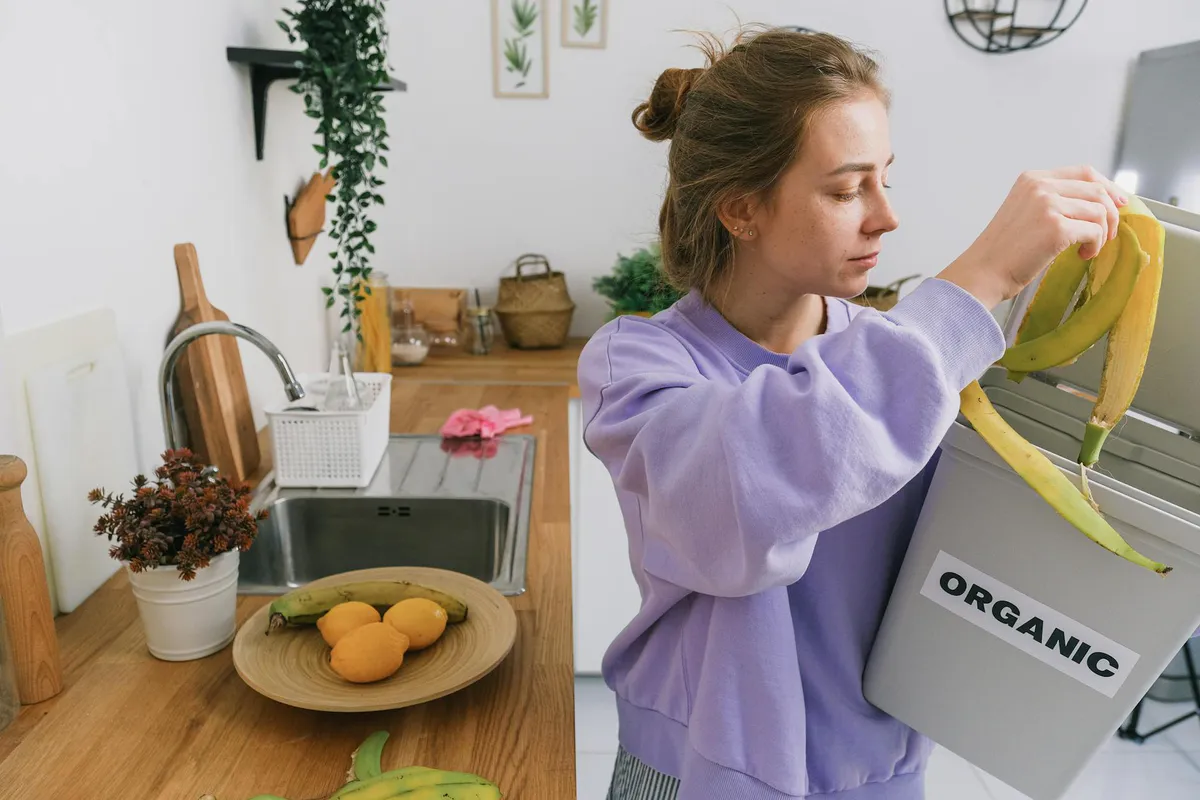
A worm bin is a shallow container filled with bedding (shredded newspaper, coconut coir) and red wiggler worms. You feed them kitchen scraps, and they produce worm castings, which is one of the richest soil amendments you can get.
The classic setup is a Rubbermaid tote with holes drilled in the lid and sides. Total cost: very little for the bin plus an inexpensive pound of red wigglers (about 1,000 worms, per NC State Extension). Fancy stacking tray systems like the mid-range Worm Factory 360 are easier to harvest from; our worm composters for small spaces roundup compares the options.
Where to put it: garage, basement, laundry room, under the kitchen sink, on a covered patio, or in a closet. Worm bins don’t smell if managed correctly. They smell like forest floor. If they stink, you’re overfeeding. (Worried about odors and rodents in general? See do compost bins smell or attract rats.)
NC State Extension suggests one square foot of bin surface for each pound of food scraps you generate per week, and notes that a pound of red wigglers eats up to about two pounds of scraps a week. A typical 18-gallon tote has roughly 2.5 to 3 square feet of surface, so weigh a week of scraps before you buy and size the bin and worm count to match.
NC State gives red wigglers an ideal range of 59 to 77 degrees Fahrenheit, with outer limits of 32 and 95. They slow down well before the extremes, so keep the bin somewhere that stays in the comfortable range, like a basement, a laundry room, or a garage that doesn’t freeze.
The worm castings you harvest are potent. A little goes a long way. Mix a modest share into potting soil, or brew worm tea (soak castings in water) and use it as a liquid fertilizer.
Option 3: Bokashi Bucket
Best for: People who want to compost ALL kitchen waste (including meat, dairy, and cooked food) in the smallest possible space.
Bokashi is a Japanese fermentation method. You layer food scraps with bokashi bran (wheat bran inoculated with beneficial microorganisms) in an airtight bucket. The microbes ferment the scraps anaerobically (without air).
Once the bucket is full, SCD Probiotics’ instructions call for about two more weeks of fermenting. Even then, the scraps aren’t finished compost yet. They’re “pickled” food waste. You bury the fermented material in a garden bed or add it to a traditional compost pile to finish breaking down, and SCD advises waiting at least two more weeks before planting over it.
A basic bokashi setup is two 5-gallon buckets (one nested inside the other with a spigot on the bottom for draining liquid) and a bag of bokashi bran. A kit costs little, and a DIY pair of buckets costs less.
The killer feature: bokashi handles meat, dairy, cooked food, bones, and citrus. Traditional composting methods say to avoid these. Bokashi ferments them (bones break down slowly), and because the bucket is sealed, odors stay in and pests stay out while the lid is closed.
The downside: you still need somewhere to bury the fermented material or a compost bin to finish it in. So bokashi is really a pre-treatment step, not a complete system by itself. But it’s perfect for small spaces because the bucket sits under your kitchen sink and takes up almost no room.

Option 4: GEOBIN Expandable Bin
Best for: People with a small yard who want the cheapest possible composting setup and don’t mind a more rustic look.
The GEOBIN is a 36-inch-tall sheet of perforated plastic. You unroll it, form a circle, secure it with the included keys, and start piling in material. It’s a budget-friendly pick.
GEOBIN lists it at 246 gallons fully opened, a circle 44 inches across. You can make it smaller by overlapping more of the material, down to 24 inches across and 70 gallons.
It’s the simplest possible compost bin. No moving parts, no chambers, no mechanisms. Material goes in the top, breaks down over time, and you unroll the bin to access the finished compost at the bottom.
The GEOBIN is best if you have a back corner or side yard where you can tuck it out of sight. It’s not as tidy-looking as a tumbler, and it sits on the ground, so it needs soil or grass underneath (not concrete or pavers, since worms and microbes need to access the pile from below).
What Goes In (and What Stays Out)
This applies to all composting methods except bokashi, which handles everything.
Compost these (greens, nitrogen-rich):
- Fruit and vegetable scraps
- Coffee grounds and filters
- Tea bags (remove staples)
- Fresh grass clippings
- Garden trimmings
- Eggshells (crush them first)
Compost these (browns, carbon-rich):
- Dried leaves
- Shredded newspaper and cardboard
- Paper towel rolls
- Straw
- Sawdust (untreated wood only)
- Dryer lint (from natural fibers)
Don’t compost these:
- Meat, fish, dairy (unless using bokashi)
- Oils and grease
- Pet waste (dog and cat)
- Diseased plants
- Weeds that have gone to seed
- Treated or painted wood
The ratio matters: aim for roughly 2 parts brown to 1 part green by volume. Too many greens and you get a slimy, smelly mess. Too many browns and decomposition stalls. When in doubt, add more browns.
Placement: Closer to the Kitchen Wins
Here’s the truth nobody wants to admit: the best composting system is the one you actually use. And one of the biggest factors in whether you’ll keep using it is how close it is to your kitchen.
If your compost bin is 50 feet away in the back corner of the yard, you’ll use it for a week, then the scraps will start piling up on the counter, and eventually you’ll stop.
Put your tumbler or bin as close to your back door or kitchen as you reasonably can. On the patio. Right outside the side door. Next to the garbage cans. Somewhere on the path you already walk.
This is more important than getting the “perfect” composting method. A tumbler 10 feet from your kitchen door will produce more compost than a fancy three-bin system at the far end of the yard.
My Recommendation by Living Situation
Small house with a patio: Dual-chamber tumbler, like the 43-gallon VIVOSUN above.
Apartment or condo: Worm bin (a DIY tote, or the mid-range Worm Factory 360). Keep it in the kitchen, closet, or on a covered balcony.
Apartment, no outdoor space at all: Bokashi bucket under the sink (a kit). You’ll need somewhere to bury the fermented material each time a bucket finishes. Some community gardens accept bokashi, so ask.
Small yard with a garden: Tumbler near the kitchen door plus a GEOBIN in the back for yard waste overflow.
Any space, budget is tight: GEOBIN if you have ground contact. DIY worm bin (a cheap tote plus worms) if you don’t.
Whichever route fits your space, the best compost bins for small yards round up the specific models worth buying so you’re not guessing on a patio-friendly size.