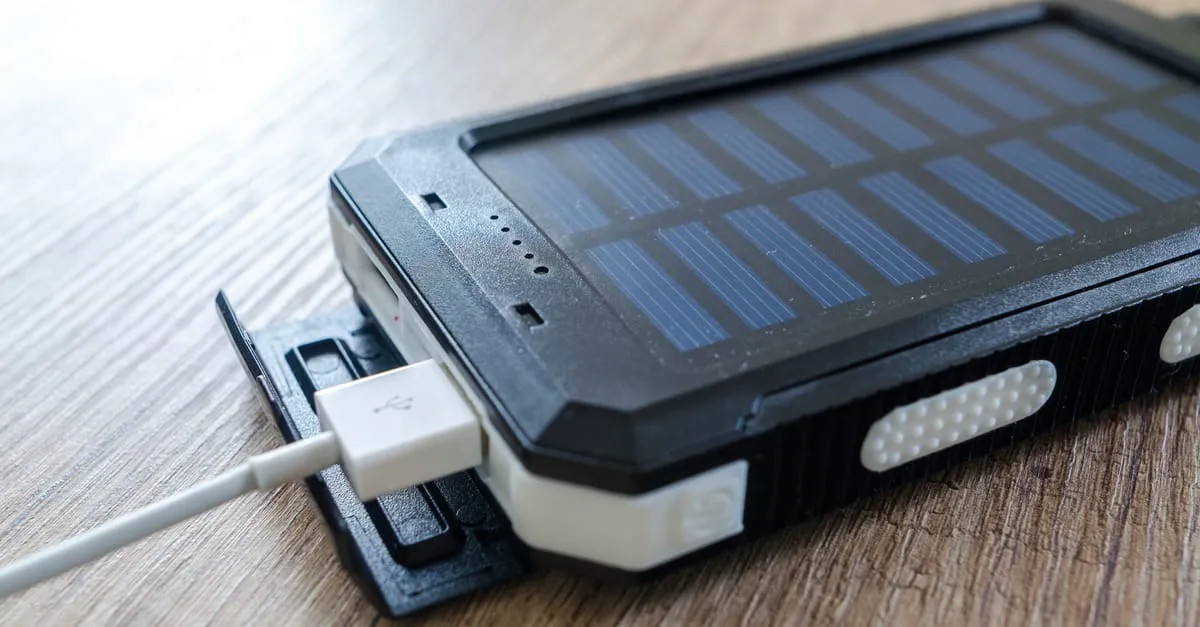

If you use a CPAP, a power outage is not a minor inconvenience, it is a night without therapy. A portable power station fixes that, and the same unit covers you for camping, an RV, or anywhere off the grid. But CPAP backup has two quirks that ordinary “how big a battery do I need” advice misses, and getting them wrong is how people end up with a unit that dies at 2 a.m.
The first quirk is the humidifier. A CPAP motor by itself sips power, often only 30 to 60 watts. The heated humidifier and heated hose are heaters, and they can double the draw or more.
So the biggest lever on how many nights a battery gives you is turning the humidifier and heated hose off. With them off, a small battery can run a CPAP most or all of the night. With them on, the same battery might not last until morning. Most people are fine without the humidifier for a night or two, and turning it off roughly doubles your runtime.
The second quirk is power compatibility. A CPAP is sensitive electronics, and cheap modified-sine car inverters can make a machine run hot or behave oddly. Use only an AC output, DC cord, and adapter that your CPAP manufacturer accepts for your exact machine.
Three units cover the range, from a 10-pound travel battery that handles most of a dry night (a full one on its 12V DC outlet) to a unit that covers two to three dry nights, so you can match the capacity to how you will use it: an occasional outage, regular camping, or a multi-day backup.
How Long Will a CPAP Run on a Battery?
Short answer: it depends almost entirely on the humidifier. Here is the math, using realistic figures.
A CPAP with the heated humidifier and hose OFF draws roughly 40 watts, so over an 8-hour night it uses about 320 watt-hours. With the humidifier ON, the draw jumps to around 80 watts or more, so a night uses about 640 watt-hours, double. After accounting for the inverter’s conversion losses (roughly 15 percent), here is what each unit’s usable capacity translates to:
| Unit | Dry nights | Humidifier-on nights |
|---|---|---|
| RIVER 3 Plus (286Wh) | About 0.8 | About 0.4 |
| Explorer 500 v2 (512Wh) | About 1.4 | About 0.7 |
| DELTA 3 (1024Wh) | About 2.7 | About 1.4 |
The lesson jumps off the page. On AC, a small 286Wh unit covers most of a dry night (about 6 hours). The 512Wh Explorer 500 v2 covers about a night and a half dry, but not a full humidifier-on night.
Only the DELTA 3 reaches two to three dry nights, or more than one humidifier-on night, in this estimate. If you need multiple nights, size up. If you turn the humidifier off and run the CPAP from a 12-volt port, a small unit can get you through the night.
Jackery Explorer 500 v2
The Explorer 500 v2 is the pick for most people because it is the smallest unit here that covers a full dry night with room to spare. At 512Wh it gives you about 1.4 dry nights per charge on AC, by the math above, or most of a humidifier-on night (about 0.7). Running the CPAP from the 12-volt port with your machine’s DC cord stretches both. And you get that without hauling a 27-pound unit. Its two AC outlets are pure sine wave, and Jackery rates its LiFePO4 battery for 6,000 cycles. It weighs 14 pounds and reaches 80 percent in about 52 minutes on a wall outlet, so you can top it off fast before a storm.
The ports help with CPAP specifically. Besides the AC outlets, it has USB-C ports and a 12-volt car port, so a CPAP with the right DC cord can skip the AC inverter (more on that below) for a real runtime gain. Its Amazon listing also lists a 10-millisecond UPS switchover, so a machine plugged into it keeps running if the grid drops while the station is on wall power.
The trade-offs are modest. With the humidifier on, one charge falls short of a full night on AC, so turn the humidifier down or off, use the 12-volt port, or plan to top it up. For multi-day outages you will recharge it (from a wall, a car, or a solar panel) or step up to the DELTA 3. Its 500W rating is plenty for a CPAP but not for kitchen appliances. For the most common need, one to two dry nights of reliable CPAP backup, it is the right size.
Skip it if you need a full humidifier-on night or backup for a multi-day outage; the DELTA 3 covers that. Skip it too if you only need a travel battery. The RIVER 3 Plus weighs 10.4 pounds to this unit’s 14.
EcoFlow DELTA 3
The DELTA 3 is the pick when one night is not enough. In the estimate above, its 1024Wh capacity works out to roughly two to three nights with the humidifier off, or more than one full night with it on. Its 1800-watt continuous output is far above the CPAP loads used in that estimate. For a multi-day outage, a long off-grid stay, or anyone who relies on the humidifier and refuses to give it up, this is the capacity class that lasts.
It uses LiFePO4 cells, reaches 80 percent charge in 30 minutes and a full charge in 56 minutes, and expands up to 5kWh using compatible EcoFlow battery packs.
The trade-off is that 1024Wh is more battery than a single dry night needs, while solar input tops out at 500W. But if you must keep CPAP therapy going through a two- or three-day outage with the humidifier off, the estimate gives you useful margin. Skip it if you only need one dry night or a travel battery; the Explorer 500 v2 or RIVER 3 Plus is lighter.
EcoFlow RIVER 3 Plus
The RIVER 3 Plus is the travel pick for road trips and weekends. At 10.4 pounds it packs easily in a car, it has pure sine wave AC, and EcoFlow rates its LiFePO4 battery for 3,000 cycles to 80 percent. With 286Wh it covers about 6 hours with the humidifier off on AC, by the math above. Run the CPAP from the 12-volt outlet with your machine maker’s DC cord and it can stretch to a full dry night, which is what most camping CPAP use needs: run the machine dry at night and recharge during the day. EcoFlow lists a full wall recharge in about an hour.
It has a 100-watt USB-C port and a 12-volt car outlet (StorageReview’s spec table lists it at 12.6V and 10A), so you can use the DC-direct trick to stretch the runtime, which matters a lot on a small battery.
The tradeoff is runtime for size: 286Wh is most of a dry night on AC, or one dry night on 12V DC. It is not a humidifier night and not a multi-night unit. Skip it if you need more than one dry night (get the Explorer 500 v2) or a full night with the humidifier on (get the DELTA 3). And it cannot fly: the FAA bars lithium batteries over 160Wh from passenger planes, and every unit on this page is above that.
How We Picked These
CPAP backup is a specific job, so the criteria are specific:
Power compatibility. A CPAP’s maker decides which AC output, DC cord, and adapter are safe for that machine. We treated that exact-model compatibility as non-negotiable.
Real runtime. We did the actual watt-hour math for humidifier-on and humidifier-off nights rather than repeating marketing claims, so you can match capacity to how many nights you need.
DC output for efficiency. Running a CPAP off DC instead of AC can nearly double runtime, so we favored units with usable 12-volt DC or high-output USB-C ports.
The right size for the use. Travel, occasional outage, and multi-day backup are different needs. We covered a 10-pound travel unit through a multi-night unit so you do not overbuy or underbuy.
Frequently Asked Questions
Before You Buy
A CPAP battery is one use of a power station, and the sizing logic overlaps with general backup:
- What size power station do I need. The full sizing method for any load, not just a CPAP.
- Best portable power stations. The general home-backup roundup if you also want to run a fridge and lights.
- Jackery vs EcoFlow. If you are choosing between the two brands featured here.
If the CPAP is only one of several things you need to keep running in an outage, size for the whole load, not just the machine.
Bottom Line
For most people who want reliable CPAP backup, the Jackery Explorer 500 v2 is the right size: it covers about a night and a half dry, or most of a humidifier-on night on AC, recharges fast, and is not too heavy to move. If you need multiple nights or refuse to give up the humidifier, the DELTA 3 gives you the larger capacity. For road trips and camping, the EcoFlow RIVER 3 Plus is small enough to pack and covers most of a dry night on AC, or a full one from its 12-volt outlet. None of these can go on a plane.
Whatever you choose, use a power path your CPAP manufacturer accepts, turn the humidifier off to stretch your nights, and use the DC input if your machine supports it. Those three habits matter more than buying a bigger battery.