
On this page · 7 sections
Put in a rain barrel and it doesn’t take long to start eyeing all that free water. Can you drink it? Not as it sits in the barrel. Not without doing real work first.
Short answer: rainwater collected off a roof is not drinking water. To make it safe you need to do two separate things. First you filter it, to pull out sediment, bacteria, and protozoa. Then you disinfect it, to kill the viruses and microbes a filter can miss. Filter alone is not enough. Disinfect alone is not enough. You do both, in that order, and you start with clean collection so there is less junk to deal with in the first place.
Your health is on the line here, so I am going to be careful. Where there is an exact ratio or boil time, I give you the CDC’s or EPA’s number and link to it instead of guessing. Check those numbers at the source.
Why Roof-Collected Rainwater Is Risky
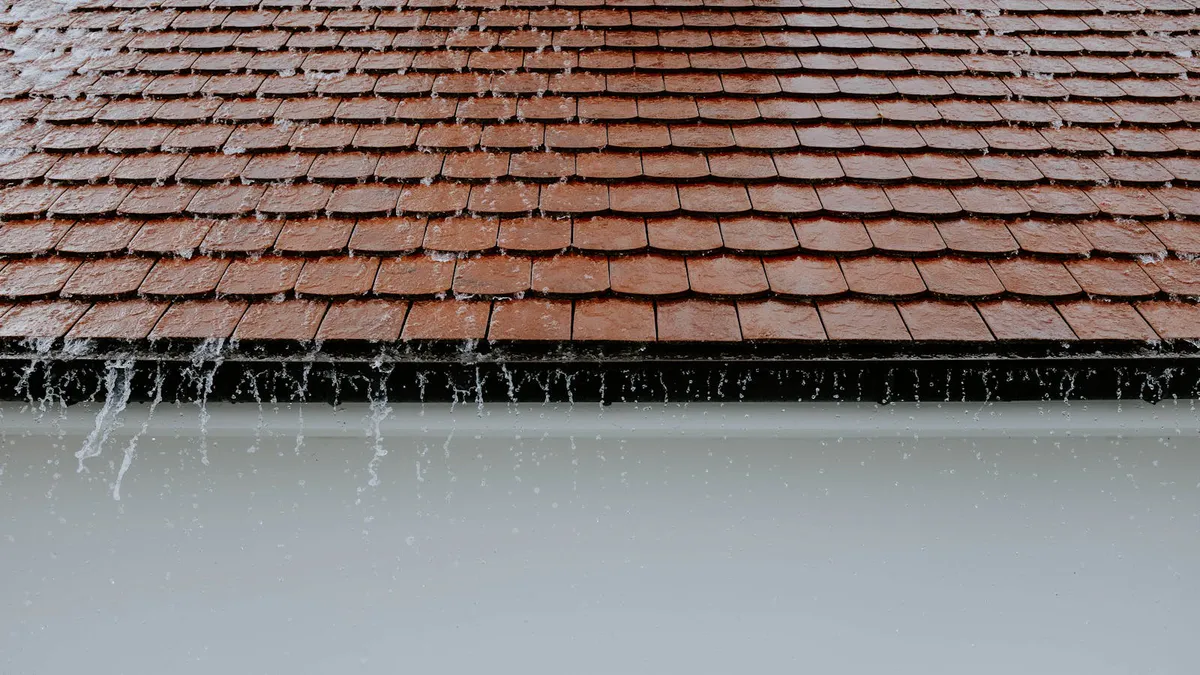
Rain itself is fairly clean when it leaves the sky, though it can pick up dust and smoke on the way down. The bigger problem is everything it touches on the way into your barrel. The CDC warns that collected rainwater can carry germs and chemicals even when it looks clean.
Your roof is not a sterile surface. It collects bird droppings, animal droppings, dust, pollen, leaf litter, dead insects, and whatever the wind dropped on it since the last storm. The first hard rain washes all of that into your gutters and down into the barrel. That runoff carries bacteria like E. coli, protozoan parasites like giardia and cryptosporidium, and organic gunk that feeds more bacteria once it is sitting in a warm barrel.
Then there is the roof material itself. Asphalt shingles shed grit and trace chemical residue. Older roofs may have lead flashing or lead-based paint nearby. Treated wood, certain metal coatings, and moss treatments all leave something behind. A barrel sitting in the sun also grows algae and can become a mosquito nursery if it is not sealed.
None of this means rainwater is useless. It is great for the garden exactly as collected. But “fine for tomatoes” and “safe to drink” are two very different bars.
The Multi-Step Process (This Is the Whole Game)
Making rainwater potable is not one device. It is a chain, and the chain is only as strong as its weakest link. Here is the order.
1. Clean collection. Start clean so you are not trying to filter out a barrel full of bird mess. Keep the roof and gutters clear. Put screens over your gutters and the barrel inlet to block leaves and bugs. Most important, install a first-flush diverter. This is a simple device that catches and dumps the first few gallons of each rain, which is the dirtiest runoff carrying the bulk of the roof contamination, before any water reaches your storage tank. It is the single highest-value upgrade for drinking-water collection. If you are still setting up your catchment, my guide on rain barrels for a small yard covers the basics of screens, downspout diverters, and keeping the system sealed.
2. Sediment pre-filter. Before water hits your good drinking filter, run it through a coarse sediment filter to pull out silt, grit, and fine debris. This is usually a spin-down filter or a sediment cartridge (5 to 20 micron). It is cheap, and it keeps your expensive drinking filter from clogging early.
3. Drinking-water filter. Now run the pre-filtered water through a quality filter rated for biological contaminants. This is the step that removes bacteria and protozoa. More on which filters below.
4. Disinfect. Even a good filter can let viruses or some microbes through. The final step kills what is left, by boiling, chemical treatment, or UV. This is not optional for water you actually intend to drink.
Skip any link and you have a problem. A first-flush diverter with no filter still leaves bacteria. A great filter fed dirty barrel water clogs fast and may not catch viruses. Disinfection without filtering leaves you drinking cloudy water full of dead organic matter.
What Filters Actually Remove (and What They Do Not)
This is where it’s easy to get into trouble, because a filter sounds like it means safe. It does not. Filters have specific jobs, and most of the popular ones share the same blind spots.
Hollow-fiber filters like the Sawyer Squeeze and the LifeStraw work by forcing water through tubes with microscopic pores. They are made to remove bacteria (E. coli, salmonella) and protozoa (giardia, cryptosporidium). They are cheap, durable, and a Sawyer Squeeze is a budget buy. The catch: the CDC’s water disinfection guidance notes that microfilters in this pore range may not adequately remove viruses, and the filter does nothing for dissolved chemicals, heavy metals, or that shingle residue. For roof rainwater you want to drink, it is one link in the chain, not the whole answer.
Gravity filters are the better fit for home rain-to-drinking setups. You pour water in the top, gravity pulls it through filter elements, clean water collects in the bottom chamber. No pumping, no power. The good ones use a blend of media that handles bacteria, protozoa, sediment, and (depending on the element) some chemicals, chlorine taste, and heavy metals. They process a few gallons at a time, which suits a household.
A quick brand note. A lot of old articles default to recommending Berkey for this. I would not, at least not as your default. Berkey has been tangled up in an EPA stop-sale dispute since 2023, and availability has been disrupted as a result. There are working alternatives that do the same job. ProOne (formerly Propur) makes gravity systems with filter elements rated for a broad list of contaminants. Alexapure offers a similar countertop gravity unit. And for a budget option you can rig into a bucket system, Sawyer sells gravity-fed kits. If you specifically want a Berkey, look into its current legal and availability status first and treat it cautiously rather than as the automatic pick.
The honest summary: hollow-fiber and gravity filters reliably remove bacteria and protozoa. Most do not remove viruses, and many do not remove dissolved chemicals. That gap is exactly why the disinfection step exists.
Disinfection Methods Compared
Disinfection is the step that closes the gap your filter left, mainly viruses and any surviving microbes. Three methods, in order of how bulletproof they are.
Boiling. This is the gold standard. A rolling boil kills bacteria, protozoa, and viruses, everything biological. The CDC says to bring clear water to a rolling boil for 1 minute, or 3 minutes at elevations above 6,500 feet. Boiling does nothing for chemicals, sediment, or taste, which is why you filter first. It also uses fuel and you have to let the water cool. But for certainty, nothing beats a hard boil.
Chemical disinfection. Plain unscented household bleach (sodium hypochlorite, no additives, no scent) will disinfect water at a specific dose per volume. The EPA’s emergency disinfection guidance calls for 8 drops of 6% bleach or 6 drops of 8.25% bleach per gallon of clear water, then 30 minutes of standing time. The dose depends on your bleach’s concentration, so check the label and the EPA table and measure rather than eyeballing it. Purpose-made water purification tablets (chlorine dioxide or iodine based) are the cleaner option, with dosing printed right on the package. Chemical treatment is light, cheap, and great for emergencies. Downsides: it leaves a taste, iodine is not for long-term use or for some health conditions, and very cloudy water reduces its effectiveness, so filter the sediment out first.
UV light. A device like a SteriPen uses ultraviolet light to scramble the DNA of bacteria, viruses, and protozoa so they cannot reproduce. You stir it in a bottle of clear water for the stated time and you are done. It is fast, adds no taste, and handles viruses, which filters miss. The trade-offs: it needs batteries or a charge, it only works on already-clear water (UV cannot penetrate cloudiness, so pre-filter), and it treats small batches, not a whole tank.
For home use, my preference is boiling for certainty, with tablets or a UV pen as backups. For grab-and-go, tablets or a UV pen win on weight.
A Realistic Home Rain-to-Drinking Setup
Here is what a practical setup looks like for someone who wants their stored rainwater to be a real drinking-water option, not just garden water.
Start at the roof. Clean gutters, gutter screens, and a first-flush diverter sized to your roof area. Run the diverted-clean water into a covered, opaque, food-safe storage tank, opaque so algae cannot grow and covered so mosquitoes and debris stay out. That is your raw store.
When you want drinking water, you pull from the tank and run it through the chain. A spin-down sediment filter takes out grit. Then a countertop gravity filter (ProOne, Alexapure, or a Sawyer bucket kit) handles bacteria, protozoa, and a good chunk of chemicals and taste. Finally you disinfect the filtered water, either by boiling a batch on the stove or treating it with the proper bleach ratio or a UV pen, before it goes into your drinking pitcher.
You do not have to treat the whole tank. You treat what you are about to use. That keeps the workload small and the treatment fresh. Budget-wise, a sediment filter and a Sawyer-based gravity setup with tablets for disinfection can come in at a mid-range price. A nicer countertop gravity system costs a bit more. The first-flush diverter and screens are a small add-on cost but the most important part. For specific units at each price point, see the gravity filters and storage we compare.
If part of your reason for harvesting is resilience, it pairs naturally with general water storage. My guides on how to store water long-term and how much water to store per person cover the reserve side, so your filtered rainwater becomes a renewable supply on top of a fixed stored buffer.
Emergency Use vs Everyday Use
The bar is different depending on why you are doing this, and it is worth being clear about it.
Everyday use. If you plan to drink filtered rainwater regularly, the chemical side matters more. You are exposed over time, so roof residue, heavy metals, and shingle chemicals add up. Lean toward a gravity filter with an element that specifically reduces metals and chemicals, keep your collection genuinely clean, and consider getting your water tested once so you know your actual starting point. Everyday drinking is where I would not cut corners on the filter quality.
Emergency use. If the grid is down and rainwater is your fallback, the priority flips to killing pathogens fast, because acute illness from bacteria or viruses is the immediate danger, not long-term chemical exposure. In that situation, filtering for sediment and then boiling or treating with tablets gets you safe-to-drink water quickly. Lighter, simpler, fast. The long-term chemical concerns matter less when the alternative is no water at all.
Same chain in both cases. The emphasis just shifts: everyday drinking weights the filter, emergency drinking weights the disinfection.
Mistakes That Make People Sick
These are the common ones, and any of them can land you with a stomach bug or worse.
Drinking it straight from the barrel. The most dangerous shortcut of all. A barrel is a warm, dark tank of roof runoff. It grows bacteria. It is garden water until it has been through the full chain.
Trusting a filter to do everything. A Sawyer or LifeStraw is made to remove bacteria and protozoa, not viruses, and not chemicals. “Filter” does not mean “safe.” Filter is step three of four.
Skipping the first-flush diverter. Without it, the dirtiest runoff of every storm goes straight into your store. You can filter harder downstream, but you are making your filters fight a load they did not need to carry.
Boiling cloudy water and calling it done. Boiling kills organisms but leaves sediment and chemicals. If the water is murky, filter it first, then boil. Same goes for chemical treatment, which works poorly in cloudy water.
Guessing at bleach or boil amounts. Too little bleach does not disinfect; too much is its own problem. Boil times change with altitude. Do not run on a half-remembered ratio. Pull the current number from the CDC or EPA and measure.
Storing treated water in dirty containers. You did all the work, then poured it into an old jug that was never properly cleaned. Use clean, food-safe containers, and keep them sealed.
Do the chain in order, clean collection, sediment, filter, disinfect, and rainwater becomes a genuinely useful drinking-water source. Cut a corner and it becomes a way to get sick. There is no shortcut that skips a step safely.