
On this page · 10 sections
The simple answer: store about 2,000 calories per person per day, then multiply by the number of people and the number of days you want to cover.
That’s it. Everything else in this guide is just turning that one number into pounds of rice, cans of beans, and gallons of water. The biggest rookie mistake is thinking in “cans” instead of calories. Let me show you how to do it right.
Why Calories Beat “Number of Cans”
It’s tempting to count items. “I’ve got 30 cans of soup and a few boxes of pasta, I’m probably fine for a couple weeks.” Then you check the labels and find that 30 cans of broth-based soup might add up to only about 5,000 calories. That’s two and a half days for one adult, not two weeks.
Food does one job in an emergency: it keeps a body running. A body runs on calories. So the only honest way to measure a food store is in calories, not in shelf space or item count.
The planning figure to use is 2,000 calories per person per day. It’s the round number the FDA uses for general nutrition advice on the Nutrition Facts label. Some people need more (active adults, larger bodies, cold climates), some need less (small kids, sedentary seniors), and I’ll cover those adjustments later. But 2,000 is the number you plan around.
From there the formula is dead simple:
Calories per day x number of people x number of days = total calories to store
A family of four for two weeks is 2,000 x 4 x 14 = 112,000 calories. Once you have that target number, you fill it with whatever calorie-dense, shelf-stable food you’ll actually eat.
Why Calorie-Dense Staples Do the Heavy Lifting
Here’s the thing that makes storage affordable: a small number of cheap, dense staples carry most of the calories. Rough per-pound numbers, rounded from typical values in the USDA’s FoodData Central database:
| Staple | Calories per pound (approx) |
|---|---|
| White rice (dry) | ~1,650 |
| Dried beans / lentils | ~1,550 |
| Rolled oats | ~1,700 |
| Pasta (dry) | ~1,650 |
| Flour | ~1,650 |
| Cooking oil | ~4,000 |
| Sugar | ~1,750 |
| Peanut butter | ~2,650 |
Oil and peanut butter are the secret weapons. A single bottle of cooking oil holds more calories than 5 pounds of canned vegetables. That’s why the classic long-term plans always include a big fats allotment.
Food Storage Tiers (What “How Long” Really Means)
Don’t try to jump straight to a year. Build in tiers and stop wherever makes sense for your situation. Here’s how I think about each one.
| Tier | Covers | Who it’s for |
|---|---|---|
| 3-day | A storm, a power outage, being stuck home | Everyone. The absolute floor. |
| 2-week | A bad storm, a job gap, a supply hiccup | The realistic target for most households. |
| 1-month | Extended disruption, illness, income loss | A strong, comfortable position. |
| 3-month | Serious regional disruption | The point where you stop relying on “the store reopening.” |
| 1-year | Long-term self-reliance | The classic deep store. A real commitment of space and money. |
If you do nothing else, get to two weeks. That’s the home supply the American Red Cross recommends for food and water, and it’s affordable enough to build on normal grocery trips. For the outage-specific angle (what to buy when the fridge is dying), see foods to stockpile for a power outage.
Per-Person 2-Week Supply
This is the tier I’d push everyone to hit first. The table below is per adult, built to land around 28,000 calories (2,000 x 14) with a normal mix of staples and ready-to-eat foods. Quantities are rounded estimates, not lab-precise.
| Food | Amount per adult (2 weeks) | Notes |
|---|---|---|
| White rice (dry) | 3 lbs | Cheap, dense, stores for years |
| Dried beans or lentils | 2 lbs | Protein + fiber |
| Pasta | 2 lbs | Fast to cook, kids eat it |
| Rolled oats | 1.5 lbs | Breakfast calories |
| Canned vegetables | 7 cans | Ready to eat, no cooking needed |
| Canned meat or fish (tuna, chicken) | 7 cans | Protein you don’t have to cook |
| Canned soup / stew / chili | 7 cans | Full meals, comfort food |
| Peanut butter | 1 jar (16 oz) | Calorie-dense, no cooking |
| Cooking oil | 16 oz | Fat + makes dry staples edible |
| Salt | 8 oz | Seasoning and preservation |
| Crackers / shelf-stable bread | 1 box | Easy carbs |
Scale it by people. Four adults? Multiply everything by four. Got kids? Count a young child as roughly half to two-thirds of an adult and adjust.
Per-Person 1-Month Supply
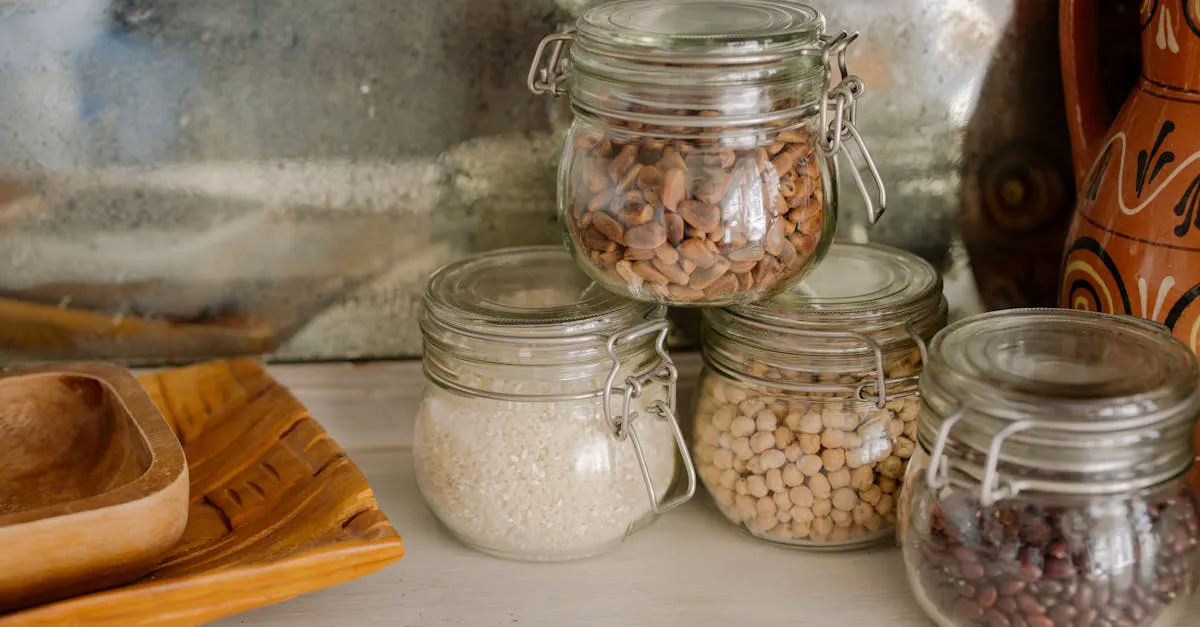
A month is roughly double the two-week list, but the mix shifts. At this tier you lean harder on the dry staples (rice, beans, oats, pasta) because they’re the cheapest calories per dollar and store the longest. Cans are convenient but expensive per calorie and heavier to store.
Target is about 60,000 calories per adult (2,000 x 30). Per-adult quantities, rounded:
| Food | Amount per adult (1 month) |
|---|---|
| White rice (dry) | 8 lbs |
| Dried beans / lentils | 5 lbs |
| Pasta | 4 lbs |
| Rolled oats | 4 lbs |
| Flour | 3 lbs |
| Canned vegetables | 15 cans |
| Canned meat / fish | 15 cans |
| Canned soup / stew | 12 cans |
| Peanut butter | 2 jars |
| Cooking oil | 32 oz |
| Sugar / honey | 1 lb |
| Salt | 1 lb |
| Powdered or shelf-stable milk | 1 small box |
| Coffee / tea (morale) | as desired |
That coffee line is not a joke. A month indoors during a crisis is a morale grind, and small comforts matter. Store some.
The Classic One-Year Baseline
Past three months, estimating item by item gets unwieldy, so it helps to start from a published framework. A good reference is Brigham Young University’s An Approach to Longer-Term Food Storage, from its Department of Nutrition, Dietetics, and Food Science. It grows out of the Latter-day Saint food storage tradition, and BYU says its amounts likely provide adequate calories and protein for an adult for one year.
Per adult, per year, BYU’s list works out roughly like this:
| Category | Amount per adult per year |
|---|---|
| Grains (wheat, white rice, rolled oats, pasta) | ~250 lbs |
| Legumes (dried beans, lentils, split peas) | ~60 lbs |
| Fats and oils | ~17 lbs of cooking oil (about 2 gallons), plus 6 lbs each of butter and peanut butter |
| Sugar or other sweeteners | ~70 lbs |
| Nonfat dry milk | ~60 lbs |
| Salt | 8 lbs |
By our count using USDA calorie values, that works out to roughly 2,200 calories a day if you actually ate through it, which lines up with the planning figure. It’s heavy on grains on purpose. Grains are the cheapest, densest, longest-storing calories you can buy. BYU’s full list also adds dried fruit and vegetables, a vitamin C source, and baking basics.
Water: The Thing Everyone Under-Stores
Here’s an easy mistake to make: a beautiful food store and almost no water. People can survive a long time without food, but only a few days without water, and you’ll feel awful long before that.
The rule of thumb is 1 gallon per person per day, the Ready.gov minimum for drinking and sanitation. It is not generous. Ready.gov notes that children, nursing mothers and sick people may need more, and that very hot weather can double water needs.
| People | Per day | 3 days | 2 weeks |
|---|---|---|---|
| 1 | 1 gal | 3 gal | 14 gal |
| 2 | 2 gal | 6 gal | 28 gal |
| 4 | 4 gal | 12 gal | 56 gal |
Look at that family-of-four, two-week number: 56 gallons. It’s a bigger number than it sounds, which is exactly why water gets under-stored.
Adjusting for Kids, Calorie Needs, and Diets
The 2,000-calorie figure is an average. Adjust it to your actual household. The Dietary Guidelines for Americans estimate that adult women need roughly 1,600 to 2,400 calories a day and adult men roughly 2,000 to 3,000, depending on age and activity, and that young children need roughly 1,000 to 2,000.
Kids. Count small children (under ~8) as roughly half to two-thirds of an adult, older kids (8 to 13) as about three-quarters of an adult or more, and teenagers as a full adult or more. An active teenage boy can out-eat his parents.
Body size and activity. A large, active adult doing physical work might need close to 3,000 calories a day. If a crisis means you’re chopping wood and hauling water instead of sitting at a desk, your needs go up, not down. Plan high if you’re unsure. Extra food is a buffer, not a problem.
Dietary restrictions. This is where generic lists fall apart. If someone is gluten-free, a store built on wheat and pasta is useless to them. Build around what your household actually eats: rice and corn instead of wheat, more legumes and nuts for protein, and so on. Same for diabetes, allergies, and medical diets. Store food your people can actually eat on a normal day.
| Person | Suggested daily planning calories |
|---|---|
| Small child (under 8) | ~1,200 |
| Older child (8 to 13) | ~1,600 |
| Teen / adult woman | ~2,000 |
| Adult man | ~2,400 |
| Large or very active adult | ~2,800+ |
A Worked Example: Family of Four
Let me walk a real calculation end to end so you can copy the steps for your own household. Say the family is two adults, one 10-year-old, and one 5-year-old, and the goal is a one-month supply.
Step 1: Daily calories for the household.
- Adult woman: 2,000
- Adult man: 2,400
- 10-year-old: 1,600
- 5-year-old: 1,200
- Household total: 7,200 calories per day
Step 2: Multiply by days. One month (30 days): 7,200 x 30 = 216,000 calories.
Step 3: Fill the target with staples. Using the per-pound calorie numbers from earlier, you might cover it like this:
| Food | Amount | Approx calories |
|---|---|---|
| White rice | 40 lbs | ~66,000 |
| Dried beans / lentils | 25 lbs | ~39,000 |
| Pasta | 15 lbs | ~25,000 |
| Oats | 12 lbs | ~20,000 |
| Cooking oil | 1 gal (~7.5 lbs) | ~30,000 |
| Peanut butter | 4 jars (~4 lbs) | ~10,000 |
| Canned goods (veg, meat, soup) | ~60 cans | ~25,000 |
| Total | ~215,000 |
That hits the target. Notice how a single gallon of oil quietly delivers about 30,000 calories, at roughly 4,000 a pound, more than twice what rice delivers per pound. That’s the calorie-density principle doing the work. If you prefer packaged supplies, compare emergency food kits against the same calorie target.
Step 4: Don’t forget water. Four people for 30 days at 1 gallon each is 120 gallons. You almost certainly won’t store all of that, so this is where a filter plus a refillable source becomes part of the plan.
For the details of keeping all this food good for years (mylar bags, oxygen absorbers, food-grade buckets, rotation), see how to store food long-term.
How to Build It Up Affordably (Don’t Buy It All at Once)
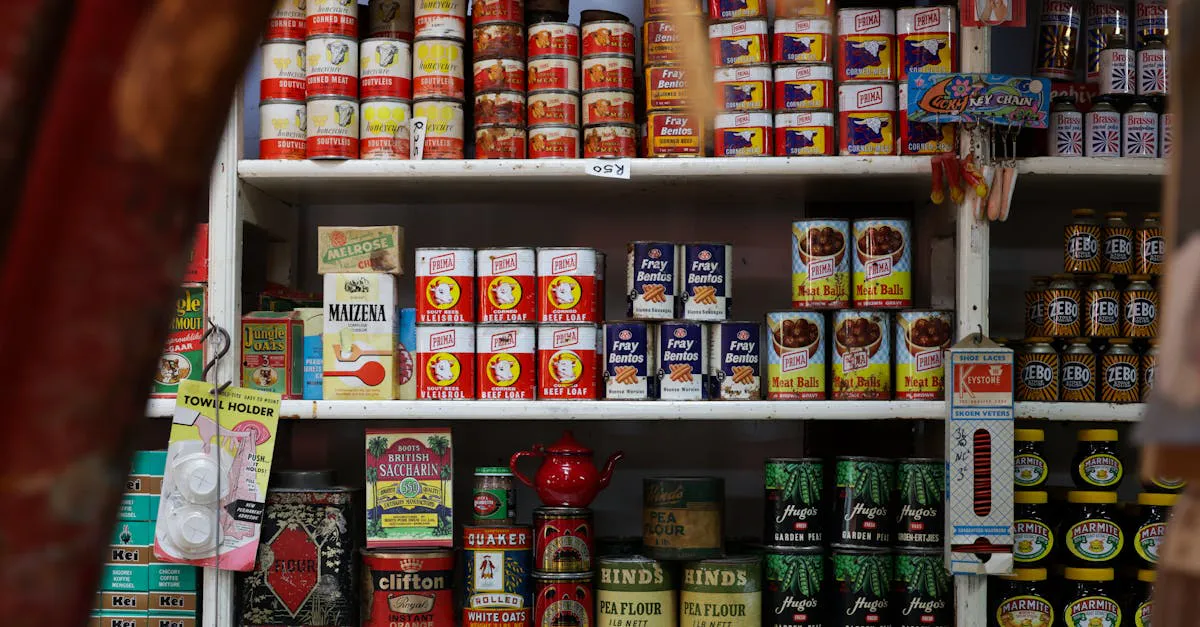
Sticker shock is what stops a lot of food stores before they start. It’s easy to price out a year of food, see a four-figure number, and quit. Don’t do that to yourself.
Build it on the margins of your normal grocery trips. The method that actually works:
- Buy two, use one. Each shop, grab an extra of the shelf-stable things you already eat. Two jars of peanut butter instead of one. The second one goes on the shelf. Your store grows without a big outlay.
- Hit the cheap staples in bulk. Rice, beans, oats, and pasta are the cheapest calories you can buy. A 20-pound bag of rice holds about 33,000 calories, more than one adult’s entire two-week target. Prioritize these.
- Spend a fixed small amount each month. Even a little storage food each month adds up to a serious store inside a year, and you never feel the hit.
- Stack tier by tier. Finish your two-week supply before you think about a month. Finish a month before three. Each tier is a real milestone.
For a full shopping list of what to actually put on those shelves, here’s the deep pantry list to work from.
Don’t Overdo It: Store What You Eat
The classic beginner failure is buying a pile of food nobody likes, sealing it in a closet, and forgetting it. Five years later it’s expired, stale, or just inedible, and the money’s gone.
Two rules keep you out of that trap.
Store what you eat, and eat what you store. Your food store should be an extension of your normal pantry, not a separate museum of survival food. If you don’t eat lentils now, a hundred pounds of lentils is a bad plan. Buy what your family already cooks, and rotate through it so nothing dies of old age.
Rotate first-in, first-out. Put new cans behind old ones. Cook from the store regularly and replace what you use. This is the entire game with shelf-stable food, and it’s why “store what you eat” works. You’re not building a tomb, you’re building a deeper pantry that quietly cycles.
If you want to go beyond shelf-stable basics and extend storage life dramatically, that’s where preservation methods come in. The main ones are compared in freeze drying vs dehydrating vs canning, which is the natural next step once your basic store is in place.
Start with two weeks. Build from there. Store food you’ll actually eat, store more water than feels necessary, and rotate it. That’s the whole thing.