
On this page · 9 sections
You bought (or built) a nice deep raised bed. Then you priced out the soil to fill it. That math stops a lot of people cold. If the sticker shock has you questioning the whole project, our honest look at whether raised beds are worth it is the place to start. The good news: you do not need premium soil all the way to the bottom. Plant roots live in the top few inches, so that is the only zone that needs the good stuff. The rest can be filled with material you already have or can get for free.
Small Property Living is reader-supported. As an Amazon Associate we earn from qualifying purchases, at no extra cost to you.
This is the single biggest money-saver in small-yard gardening, and it works in any bed taller than about ten inches. Here is how to fill a raised garden bed cheaply, layer by layer.
Why filling a raised bed gets expensive fast
Soil sounds cheap until you do the volume math. A raised bed is a box, and volume grows fast with depth. A bed that is twice as deep holds twice as much soil. Bagged soil is sold in small quantities, and you need a surprising number of bags to fill even a modest box. Double the depth and you double the bags.
That is why depth scares people. A taller bed is better for roots and easier on your back (more on that in our guide to how deep a raised garden bed should be), but filling it with bagged soil top to bottom is where budgets blow up. The fix is simple once you understand it: stop paying for soil that roots will never touch.
What can you put in the bottom? (free fillers)
The bottom third to half of a deep bed is structural. It holds volume, it drains, and over time it breaks down into more soil. It does not need to be rich or even finished. Here is what gardeners use down there:
- Logs, branches, and untreated wood scraps. The backbone of the hugelkultur method. As they rot they hold moisture and slowly feed the bed.
- Fallen leaves. Free every autumn. Pack them in. They compress and decompose into leaf mold.
- Cardboard and uncoated paper. Great as a base layer to smother weeds and grass.
- Grass clippings and spent plants. Free nitrogen-rich material from your own yard.
- Small twigs, wood chips, and bark. Good filler that improves drainage.
- Straw or old hay. Bulks up the middle layers fast.
The theme: organic material that breaks down. You are essentially composting in place underneath your growing zone.
The cheap layered method (hugelkultur for suburban yards)
Hugelkultur (German for “mound culture”) traditionally means a big buried-wood mound. The small-yard version is tamer and fits neatly inside a raised bed. The idea is the same: bury woody material at the bottom so it acts as a slow-release sponge.
Build it in layers, coarsest at the bottom:
- Cardboard on the very bottom to block weeds.
- Logs and branches as the structural core.
- Twigs, wood chips, and bark to fill the gaps.
- Leaves, grass, and spent plants packed on top of the wood.
- Half-finished compost or aged manure to bridge into the growing layer.
- Quality soil and finished compost as the top growing zone.
As the wood breaks down it feeds the bed for years and holds water like a reservoir, which means less watering in summer. That is a real perk on a small lot where you may not have a sprinkler system. If your native ground underneath is heavy, our guide on fixing clay soil in raised beds is worth a read before you build.
The cheapest way to fill a bed, step by step
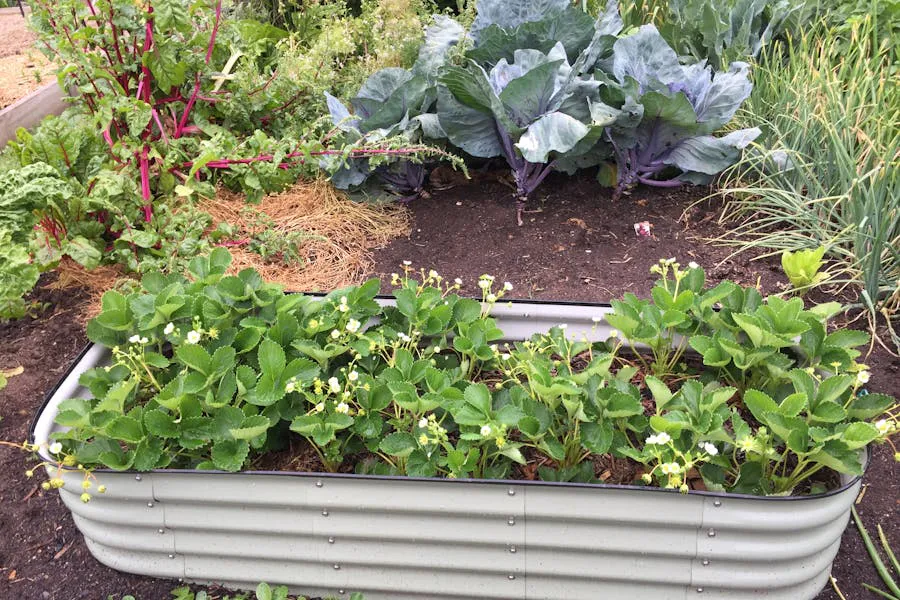
Here is the no-frills version if you just want to get it done:
- Lay cardboard across the bottom and up the inside edges. Wet it down.
- Dump in your woody material. Logs first, then branches, then twigs. Stomp it to settle.
- Pack leaves and grass into every gap until the bed is filled to roughly halfway or a little more.
- Add a layer of aged manure or rough compost to start the feeding zone.
- Top it off with a blend of soil and finished compost for the final growing inches.
- Water deeply to settle everything, then top up any sinkholes.
The whole point is that steps 2 through 4 cost you nothing or close to it. You only open your wallet for the top.
What NOT to put in the bottom
Free does not mean anything goes. Skip these:
- Treated or painted lumber. Chemicals leach into your soil and your food.
- Diseased plants. You will reintroduce the problem next season.
- Black walnut wood or leaves. They release juglone, which is toxic to many vegetables.
- Glossy or coated paper. The coatings do not belong in a food bed.
- Rocks or gravel “for drainage.” This is an old myth. A layer of rock does not improve drainage and just steals growing volume. Skip it.
- Plastic, foam, or landscape fabric as fill. It does not break down and it traps roots.
How much soil do you actually need? (the top 6-8 inches)
This is the number that saves you money. Most vegetable roots do their real work in the top six to eight inches of soil. Shallow crops like lettuce and herbs need even less. Only a few deep-rooted plants reach further, and even they branch out mostly near the surface.
So your quality-soil budget should cover roughly the top six to eight inches of the bed, no matter how deep the box is. A bed that stands 17 inches tall still only needs good soil in the top half or less. The bottom is your free fill. That is the entire trick, and it is why a deep bed is not as expensive to fill as it looks.
The soil mix ratio for the growing layer
The top growing zone is where you should not cut corners. A simple, reliable raised bed soil mix ratio for that layer is:
- About 50% topsoil or quality garden soil for body and minerals.
- About 30% finished compost for fertility and life.
- About 20% aeration material like coarse sand, perlite, or fine bark for drainage.
A common shorthand is one-third soil, one-third compost, one-third aeration. Either is fine. The exact split matters less than getting real compost in there. If you are building or improving your own compost supply, our guide to the best compost setup for small yards walks through what actually works on a small lot. Homemade compost is the cheapest fertility you will ever get.
Free and budget fill sources
You can fill a bed without spending money if you know where to look. In our research, the sources gardeners use most often are:
- Your own yard. Leaves, grass clippings, prunings, and spent plants.
- Neighbors. Bagged leaves in fall, branches after storms.
- Municipal compost or mulch programs. Many towns offer free or low-cost compost and wood chips to residents.
- Tree services. Arborists often drop wood chips for free rather than pay to dump them.
- Local “free” listings. People give away logs, manure, and leaves constantly.
- Coffee shops and stables. Free coffee grounds and aged manure if you ask.
Mix and match these and you can fill the bottom of a bed for nothing, then buy only the top growing layer.
Will the fill sink? Topping off in year two
Yes, it will sink, and that is normal. All that organic material at the bottom is decomposing, which means it shrinks. Expect the soil level to drop noticeably after the first season as the wood and leaves break down.
This is a feature, not a flaw. The breakdown is what feeds your plants. Just plan to top off the bed each spring with a few inches of fresh compost and soil. The sinking slows down after year two once the coarse material has done most of its rotting. By then you have rich, living soil that you mostly built for free.
If you are still choosing a bed for this method, a deep metal or wood kit gives you the most room for cheap fill underneath. We compare our favorites in the best raised bed kits roundup, and it pairs naturally with a smart eighth-acre garden layout if you are planning a small-lot grow.
A deep bed does not have to mean a deep dent in your budget. Fill the bottom with free organic material, save your good soil for the top six to eight inches, and let the whole thing turn into rich soil over time. Want help picking the right bed first? Start with our best raised bed kits guide.