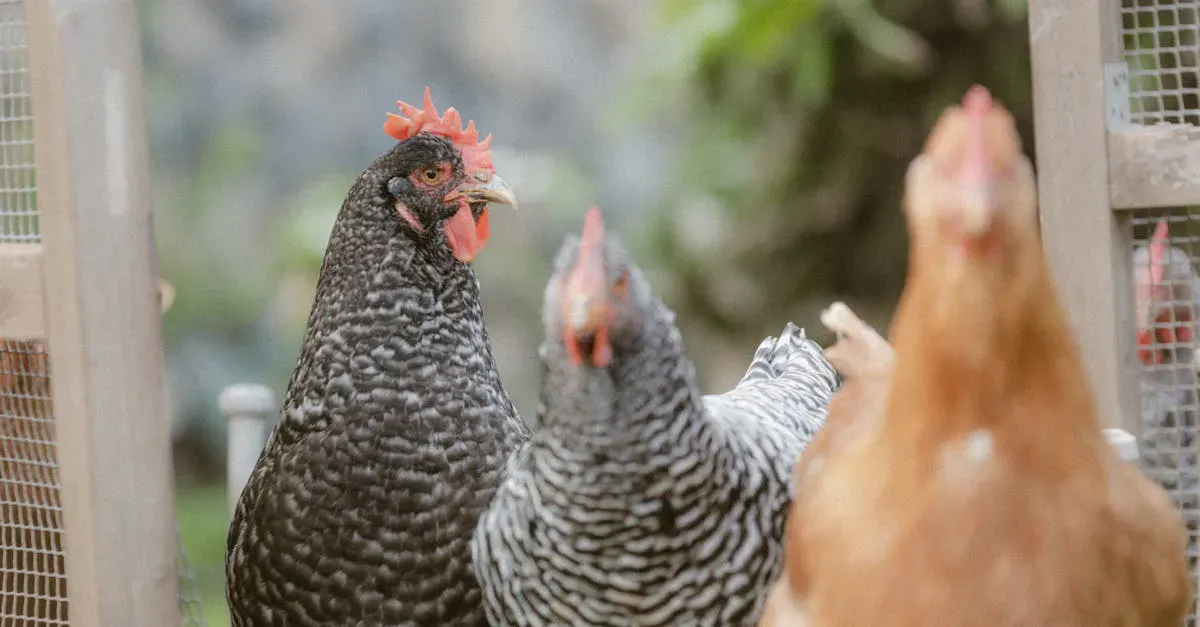

Chickens need liquid water every day, including the coldest day of the year. A flock will not eat snow to stay hydrated, and a hen that cannot drink stops laying within a day or two and gets sick fast. So if your winters dip below freezing, a heated waterer is not a luxury, it is the thing that keeps your birds healthy from November to March without you hauling thawed water out twice a day.
The good news is that keeping water liquid is a small electrical job. The four picks here span 60 to 250 watts, and all four heaters are thermostatically controlled. The decision comes down to two things: how clean you want the water to stay, and whether you would rather buy a complete heated drinker or just heat the fount you already own.
On cleanliness, the dividing line is open water versus nipples. Open fountains and trays are intuitive for every bird, but they collect bedding, droppings, and algae and need regular cleaning. Nipple drinkers stay clean for days because the water is sealed inside and the bird pecks a valve to get a drop. Their valves need occasional cleaning, and ducks still need a second source deep enough to submerge their heads. On the buy-versus-reuse question, a heated base is a heated plate you set your existing drinker on, so if you already own a fount, you only buy the base.
Four picks cover those choices: a 2-gallon, 60-watt nipple drinker, a high-capacity 3-gallon nipple drinker, a closed 3-gallon nipple drinker rated to -20 degrees, and a base that turns your old fount into a winter waterer.
Farm Innovators HB-60P Heated Poultry Waterer
The Farm Innovators HB-60P is the pick for a small backyard flock that wants clean winter water without a big power draw. It is a 2-gallon closed bucket with drip-free nipples on the side, and its 60-watt heater is thermostatically controlled, so it runs only when the water needs it. Farm Innovators rates it for up to 15 chickens. That 60 watts is well under the 100 to 250 watts of the bigger heated waterers below.
The side nipples are the other reason it suits a small flock. The water is sealed inside, and a bird pecks a valve to release a drop, so there is no open surface for droppings, bedding, or algae to foul. A metal handle lets you hang it at back height, or you can set it on the ground, and the top lifts off for refilling. Retail listings such as Do it Best’s describe three nipples.
The limits are about size and habit. Two gallons goes fast with a full flock of 15, so expect to refill often. Birds raised on open waterers can take a few days to learn the nipples, so keep the old waterer out until you see every bird drinking. Skip it if you keep ducks, which need water deep enough to dunk their heads.
Premier 1 All-Season Heated Poultry Waterer
The Premier 1 is the clean-water pick for a flock that has outgrown the 2-gallon Farm Innovators. It holds 3 gallons and serves up to 35 adult chickens through three recessed nipples, so the supply stays sealed and fresh until a bird drinks. The 100-watt heater switches on below 40 degrees and off at 60, keeping the water unfrozen without making it hot.
The quick-fill hinged cap is large enough for a hose or watering can, so you can refill without removing the insulated lid even if it freezes to the basin. A heavy-duty handle lets you carry or hang the 14-inch-high by 13-inch-wide by 13-inch-deep unit, and the 16-foot cord detaches for warm-weather use. Three spare nipples are included.
Nipples are cleaner than open water, but they are not maintenance-free. Debris can clog them and they can develop a slow leak, so inspect and rinse the valves regularly. Ducks trained to horizontal nipples can use this waterer, but Premier 1 recommends keeping a second source nearby so they can submerge their heads.
Lilyang Heated Chicken Waterer
The Lilyang is the pick for the coldest winters in this roundup. It is a closed 3-gallon drinker with horizontal drinking nipples near the base, and its 250-watt thermostat-controlled heater switches on at 35 degrees, off at 70, and prevents ice down to -20 degrees. The unit is fully waterproof, its cast-aluminum heating element protects the plastic base from melting, and the 6.5-foot cold-weather cord reaches a nearby outdoor-rated connection.
The 3-gallon reservoir supports 10 chickens or 30 chicks for two to three days. Its removable lid slopes at 50 degrees so birds cannot perch on top and soil it. You can stand it on the included elevating legs or hang it.
The heating plate detaches for warm-weather use, so this does not become a winter-only purchase, and it carries a 6-month warranty. The trade-offs are real: 250 watts is the highest draw on the page, and 3 gallons means a refill every 2 to 3 days for 10 hens, per the maker. Skip it if your winters rarely drop far below zero; the Premier 1 holds the same 3 gallons on 100 watts.
Harris Farms Heated Poultry Base
If you already own a fount, you may not need a whole new waterer. A heated base is a thermostatically controlled plate you set your existing drinker on, and it warms the bottom enough to keep the water liquid. The Harris Farms base is a 125-watt thermostatic plate that is safe with metal and plastic drinkers, per the listing, and Harris Farms says it prevents freezing down to 10 degrees. For winter you just move your summer fount onto the base and plug it in.
The appeal is reuse. Rather than buying and storing a separate winter drinker, you keep using the fount you already have, and the base tucks away in summer. The thermostat means it only heats when it is cold, keeping the running cost low.
The caveats are straightforward. The fount is sold separately, so this is the right pick only if you already have a drinker, not for someone starting from nothing. Harris Farms says to use it indoors or outdoors in a dry, covered area, so it belongs inside the coop or under a roof. And of the heated options here its 10-degree rating is the most modest, so in a region with deep sustained cold a waterer rated lower, like the Lilyang at -20 degrees, may hold up better. For the many keepers who already have a fount, though, it is the most economical way to make it winter-ready.
How We Picked These
Winter watering has a narrow job, so the criteria are specific:
Cold-weather performance. A winter waterer has to stay liquid in the temperatures your flock actually sees. We compared heater draw, thermostat set points, and cold-weather range so you can match the unit to your climate.
Cleanliness. Dirty water spreads disease faster than almost anything in a coop. The Farm Innovators, Premier 1 and Lilyang all seal the supply behind nipples, and the Lilyang adds a steep lid so birds cannot perch on top. An open fount on the Harris Farms base needs more cleaning.
Running demand. The heaters range from 60 watts for the Farm Innovators to 100 for the Premier 1, 125 for the Harris Farms base, and 250 for the Lilyang. We weighed that electrical demand against capacity and cold-weather performance.
Capacity matched to flock. A 2-gallon drinker for up to 15 birds and a 3-gallon waterer for up to 35 solve different problems. We covered both capacities plus the reuse-your-fount option so you can buy for your actual flock size.
Frequently Asked Questions
Before You Buy
A heated waterer is one part of getting a flock through winter. It pairs with the rest of your cold-weather setup:
- Keeping chickens warm in winter without electricity. Why a heated waterer matters more than a heated coop.
- Best chicken feeders and waterers. The full feeding and watering roundup, including the warm-weather versions of these drinkers.
- How many chickens should a beginner start with. Get your flock size right so you buy the right waterer capacity.
The right capacity depends on your flock size, so it is worth knowing how many birds you are watering before you choose between a 2-gallon drinker and a 3-gallon one.
Bottom Line
For most small backyard flocks, the Farm Innovators HB-60P fits: a 60-watt thermostatic heater and side nipples that keep the water clean for up to 15 birds. Choose the Premier 1 when you need that same nipple cleanliness at 3-gallon capacity, or the Lilyang when you need protection down to -20 degrees, with a sloped anti-roost lid. If you already own a fount, metal or plastic, the Harris Farms heated base is the reuse option.
Whichever you choose, run it on an outdoor-rated cord and a GFCI outlet, and favor a thermostatic unit so you are not paying to heat water that is not freezing. Get the watering sorted before the first hard freeze, and winter chicken keeping gets a lot easier.