
Short answer: most combos hold about half the hens the box says. Pick by flock size:
- 1 to 2 hens on a small budget: the Tangkula or PawHut, plus better latches and a hardware-cloth apron.
- 2 hens now, more later: the Magazoopet, which takes add-on run sections.
- A bigger flock you can walk in to tend: the OverEZ coop with its bolt-on run.
- The fastest cleanouts: the plastic Omlet Eglu Cube, plus a run you add.
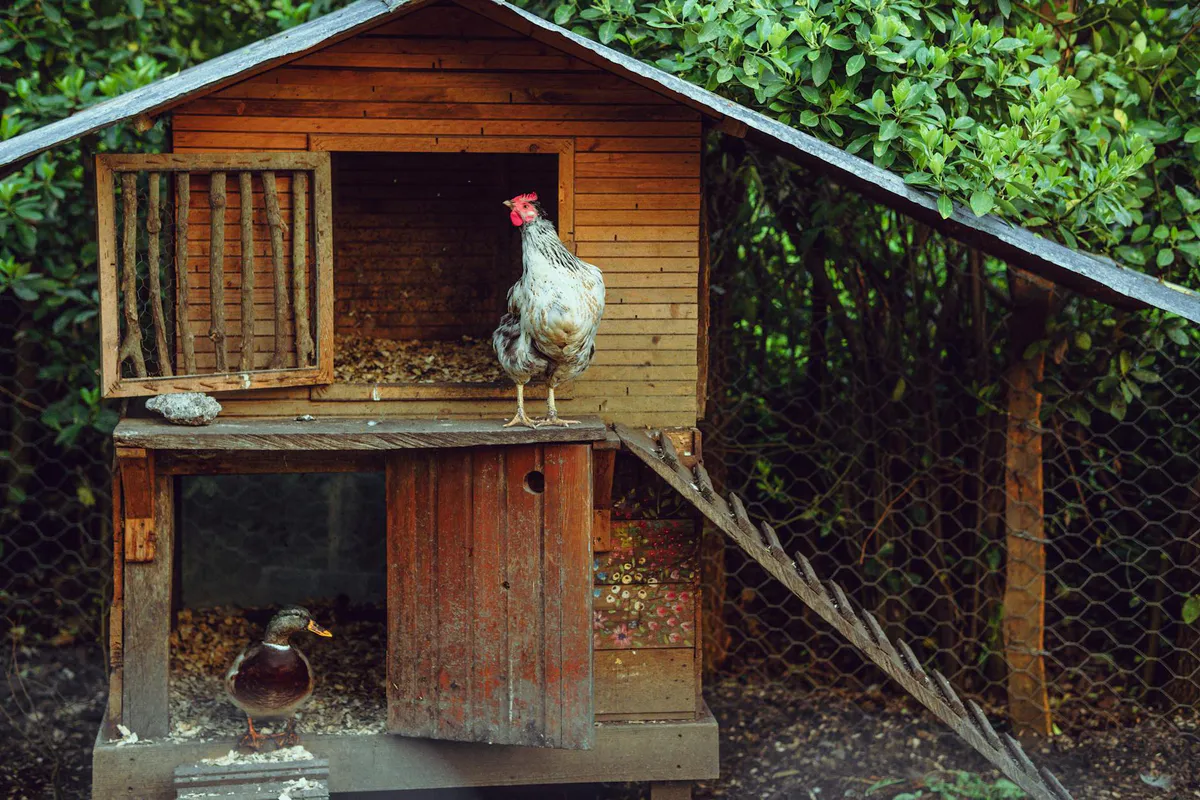
A coop with an attached run is the simplest way to keep backyard chickens. The house and the outdoor space arrive together, so you do not have to design and build a run yourself. It is the format most first-time keepers should buy. But it comes with one trap that catches a lot of buyers.
Coop-with-run listings routinely overstate how many birds they hold, often by double or more. Run the space math on the budget combos below and the realistic count is about half the box number or less. A coop sold for “8 to 10 chickens” can easily be a 4-to-5-bird home. One sold for “2 to 4” is really a 2-bird home. Sellers count how many birds physically fit, not how many can live there healthily.
The working standard is about 4 square feet of coop floor plus 8 to 10 square feet of run per standard hen. Penn State Extension calls for 8 square feet of outdoor run per laying hen. The Extension Foundation’s poultry team recommends 3 to 4 square feet indoors and 10 outdoors. Crowd birds past that and you get pecking, disease, and filthy conditions fast. So each pick below gets an honest capacity, not the box number.
The other thing that separates a good combo from a cheap one is predator protection. Chicken wire keeps chickens in; it does not keep raccoons, foxes, or weasels out. The single best protective feature is an anti-dig skirt or apron at ground level, and as you will see, none of the listings below includes one. So plan on adding hardware cloth.
Omlet Eglu Cube Coop (Coop Only)
The Amazon listing for the Eglu Cube is the coop only. The run is not included. Omlet’s own run for the Cube is welded steel mesh with an anti-dig skirt that lies flat on the ground, but it is not part of this listing. If you buy the coop here, plan a run too: Omlet’s, or a hardware-cloth run you build using our chicken run ideas for small yards.
The coop itself is the easiest here to live with. It is twin-wall plastic, made to stay cool in summer and warm in winter. The plastic wipes clean and does not harbor the mites that live in the grain of wooden coops, so a full cleanout is a quick hose-down instead of an afternoon of scraping.
Honest capacity: Omlet rates it for 6 large or 10 small hens. But Omlet lists the inside at about 2 feet 10 inches by 2 feet 9 inches, close to 8 square feet. By the 4-square-foot floor standard on this page, that fits about 2 standard hens. Treat Omlet’s number as the most that fit, not the number to plan on. The downsides are price (it is the most expensive coop here, before you add a run) and an involved assembly.
Skip it if you want the coop and run in one box, or you want room for more than 2 standard hens.
OverEZ Walk-In Coop
If you want a wooden coop you can actually walk into and stand up in, the OverEZ is the pick. OverEZ says it is made in the USA by Amish-trained craftsmen, with a 6-foot walk-in interior, 5 nesting boxes, 3 roosts, and a Dutch door, built with moisture-treated resin components so it holds up outdoors. Amazon stock on big coops like this comes and goes, so the link below searches the current listings; OverEZ also sells direct.
The walk-in height changes coop life. Instead of crawling in to clean or reaching through a small door, you walk in, stand up, and maintain it like a small shed. For anyone who has wrestled with a hutch-style coop on their knees, that alone is worth a lot.
Two things to know. The run is a separate purchase: OverEZ sells a bolt-on walk-in run that attaches to the coop, so a full walk-in coop-and-run is two items to pair. And while OverEZ markets the coop for up to 18 chickens, its listed footprint of about 74 by 60 inches is roughly 31 square feet, which at 4 square feet per hen works out to 7 or 8 standard birds. That is still a real flock. It is a high-end, wood-only purchase, and the only true walk-in here.
Skip it if you keep only 2 or 3 hens or have a tight side yard. A compact combo below takes far less room.
Magazoopet Large Wooden Chicken Coop
Magazoopet lists this coop for 4 to 6 chickens, but the included run is 61 inches long by 33.5 inches wide, or about 14 square feet. At the page’s standard of 8 to 10 square feet of run per standard hen, the honest capacity is about 2 hens, not 4 to 6, unless you expand it. Additional run sections connect to the expandable design, but they are sold separately.
The coop itself packs in useful access. It has three raised perches and six divided nesting boxes that open from outside under a lift-up lid for quick egg collection. The curved weatherproof roof opens for ventilation, sliding windows add airflow, and the doors lock. Both the front and rear doors convert into ramps, and dual pull-out trays let you clean from either end.
The expandable run is what makes this more useful than a fixed small wooden combo. Add the same hardware-cloth apron I recommend for every coop here before trusting it against digging predators.
Skip it if you want more than 2 hens and do not plan to buy extra run sections.
PawHut Wooden Coop with Run
The PawHut is the budget combo that looks the part and works for a small flock once you read its real capacity. It is a compact fir coop with an A-frame-style ramped house, a wire run, an asphalt roof over the sleeping area, and a removable tray that makes cleaning quick. Its 77-inch length fits into a tight side yard where a bigger combo will not.
For the money, the ergonomics are decent: the ramp, the removable tray, and the liftable access make day-to-day care simple, which matters because a coop that is annoying to clean gets cleaned less.
The honest capacity is 2 hens. The coop house is under 7 square feet and the run around 14, which by the real standard works out to a couple of birds, not the 3 to 4 the listing suggests. The wood is thin, the latches are basic, and there is no anti-dig skirt, so this is a coop you reinforce: upgrade the latches, add hardware cloth at ground level, and it becomes a sound budget home for two birds in a mild climate.
Skip it if you want more than 2 hens, get hard winters, or would rather not swap latches and add hardware cloth yourself.
Tangkula Wooden Hen House with Run
The Tangkula is the cheapest real combo here, and it earns its place for a buyer with one or two birds who wants the lowest possible entry price. It is a 71-inch fir hen house with a waterproof-painted finish, a wire run, a slide-out tray for cleaning, and a raised, ramped design. The long, narrow footprint gives you a bit more run length than other coops at this price.
The slide-out tray is the standout feature for the money, since it makes cleaning quick. And the raised design keeps the birds off the cold ground.
Be realistic: at 23 inches wide and 29 inches tall, this is a cramped coop, honestly a 1-to-2-bird or bantam home, not the “2 to 4” some listings claim. The latch hardware is light-duty and the wood is on the thinner side, so it wants upgraded latches and a hardware-cloth apron before you trust it overnight. As the absolute budget entry point for a tiny flock, it does the job.
Skip it if you plan on more than 2 birds or want a coop you will not need to reinforce.
How We Picked These
These are researched picks, compared on manufacturer specs, the linked listings, and owner feedback. A coop-with-run has to do two jobs well, house the birds and protect them outdoors, so the criteria are:
Honest capacity. We start by halving the listing count, then compare the available dimensions with the 4-square-foot-coop, 8-to-10-square-foot-run standard so you can buy for the flock you actually keep.
Predator protection. We weighted ground-level defense heavily. Omlet’s own run has a built-in anti-dig skirt, but it is sold apart from the coop-only Amazon listing. Plan on a hardware-cloth apron for every other run.
Ease of cleaning. Pull-out trays, walk-in height, and access doors decide whether you keep the coop clean or let it slide. We favored designs that make weekly cleaning quick.
Value for the build. A budget coop that needs reinforcing can still be a good buy if you go in knowing it. We were clear about which units are turnkey and which are a starter you finish.
Frequently Asked Questions
Before You Buy
A coop with a run is one decision in setting up a flock. These help you get the rest right:
- Best chicken coops for beginners. The full coop roundup, including coop-only options and a chicken tractor.
- How many chickens should a beginner start with. Settle your flock size before you size the coop.
- Chicken run ideas for small yards. How to give birds safe outdoor space if you extend or build a run.
Getting the flock size right first is what keeps you from buying a combo that is too small, so it is worth reading before you order.
Bottom Line
If the budget allows and you will add a secure run, the Omlet Eglu Cube coop is the easiest here to keep clean. By floor space it fits about 2 standard hens. The Amazon listing is the coop only, so budget for Omlet’s run or build one from hardware cloth. If you want a wooden coop you can walk into, the OverEZ is a true walk-in with a bolt-on run. Amazon stock comes and goes, and OverEZ also sells direct.
For a feature-packed wooden option, the Magazoopet Large Wooden Coop has six outside-access nesting boxes, three perches, and dual pull-out trays. Its included 14-square-foot run honestly fits about 2 standard hens, not the listed 4 to 6, so buy separate expansion sections for a larger flock. The PawHut fits a narrow side yard, and the Tangkula is the cheapest way to house one or two birds. Inspect the latches and add a hardware-cloth apron to every wooden model.